
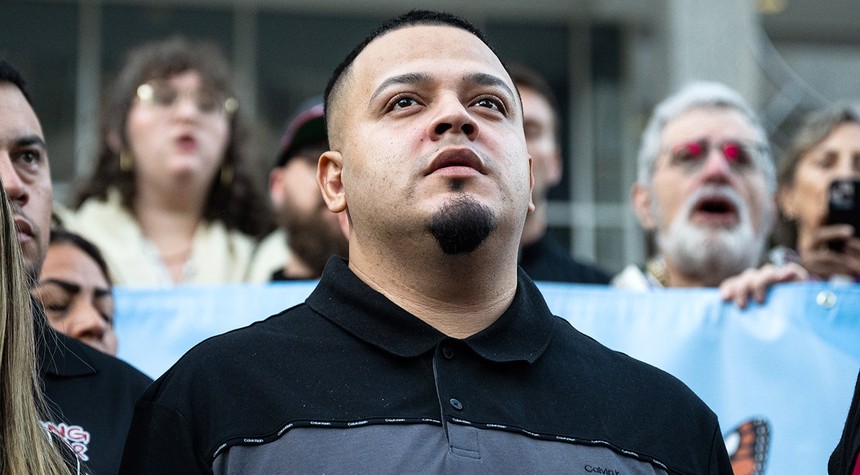
A federal judge has ordered the release of a Salvadoran migrant from immigration custody, concluding that the Trump administration lacked proper legal authority to continue his detention.
U.S. District Judge Paula Xinis issued her ruling Thursday in Greenbelt, Maryland, directing that Kilmar Abrego Garcia be released from the ICE Moshannon Valley Processing Center in Philipsburg, Pennsylvania. The decision represents the latest development in a complex legal dispute that has stretched across ten months, two continents, and multiple federal courtrooms.
At the heart of Judge Xinis’s ruling lies a fundamental question of procedural law. The court determined that the Trump administration had failed to obtain the final notice of removal order required to deport Abrego Garcia to a third country.
“Since Abrego Garcia’s return from wrongful detention in El Salvador, he has been re-detained, again without lawful authority,” Judge Xinis stated in her written order. “For this reason, the Court will grant Abrego Garcia’s petition for immediate release from ICE custody.”
The case centers on an immigration judge’s 2019 ruling that prevented Abrego Garcia’s removal to his home country of El Salvador. During last month’s evidentiary hearing, Justice Department attorney Drew Ensign argued that the immigration judge had “meant” or implied a final order of removal. Judge Xinis rejected this interpretation in her Thursday ruling, stating unequivocally that “no such order of removal exists for Abrego Garcia.”
The judge’s decision invokes Supreme Court precedent established in Zadvydas v. Davis, which prohibits the government from indefinitely detaining migrants after removal orders have been issued. Without a final notice of removal, Judge Xinis determined that Abrego Garcia qualified for relief under this precedent.
Additional complications emerged regarding third-country deportation options. Judge Xinis questioned Trump administration officials about their refusal to deport Abrego Garcia to Costa Rica, whose government had reportedly provided necessary assurances against detaining him or returning him to El Salvador. Trump officials indicated that Costa Rica was “off the table” but provided no supporting evidence for this position.
Subsequent court filings suggest that Costa Rica had not withdrawn its agreement to accept Abrego Garcia, raising questions about the administration’s explanation. The Trump administration had previously identified several African nations as potential third-country destinations.
The Justice Department appears likely to appeal Judge Xinis’s order to a higher court, as attorney Ensign indicated during previous hearings. Trump administration lawyers had repeatedly requested that Judge Xinis dissolve an emergency order she issued in August requiring Abrego Garcia to remain in U.S. immigration custody within 200 miles of her court.
The judge’s ruling now permits Abrego Garcia to remain in the United States with his brother while his case proceeds through the legal system. The outcome of any appeal will determine whether this release becomes permanent or represents merely a temporary reprieve in an already lengthy legal battle.
This case highlights the intricate legal requirements governing immigration detention and removal proceedings, particularly when third-country deportations are involved. The dispute underscores ongoing tensions between immigration enforcement priorities and procedural safeguards designed to prevent unlawful detention.
Related: Department of Homeland Security Moves to Require Social Media Disclosure for Foreign Travelers
