
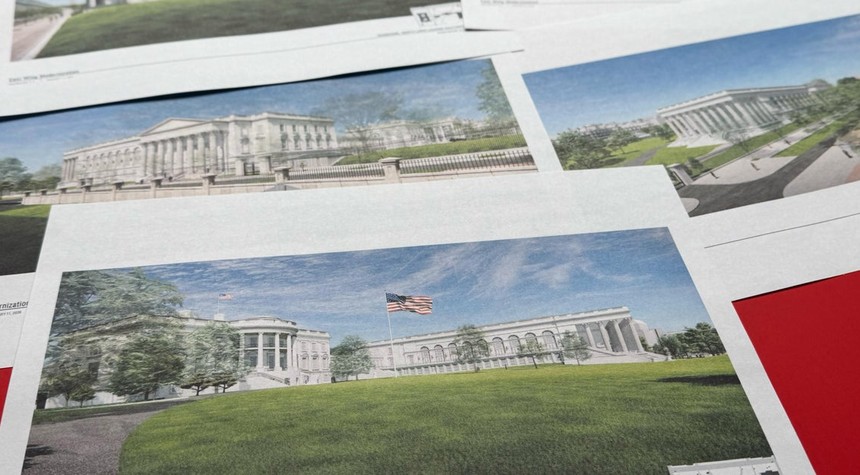
The Commission of Fine Arts voted Thursday to grant final approval for President Trump’s proposed overhaul of the White House East Wing, advancing plans for a substantial new ballroom despite what officials characterized as unprecedented public opposition.
Six commission members voted to approve the project during a virtual meeting, while one member recused himself. All voting members had been appointed by President Trump following his decision to remove the previous commission in October. The member who recused himself was the original architect of the ballroom design.
Architect Shalom Baranes presented detailed renderings and technical drawings to the commission, displaying the proposed East Wing exterior from multiple vantage points. The presentation revealed one significant modification from earlier designs: the removal of a pediment that had been planned for the south face of the ballroom. Baranes also provided animated simulations demonstrating how the public would view the new construction from both northern and southern approaches to the complex.
Landscape architect Rick Parisi contributed presentations showing planned foliage arrangements around the ballroom grounds and the proposed relocation of a fountain on the eastern edge of the White House campus. Commission staff members displayed a three-dimensional model of the White House and Treasury complex to illustrate the scale of the proposed addition.
The approval came against a backdrop of substantial public criticism. Thomas Luebke, the commission’s secretary, noted the extraordinary level of public engagement surrounding the project.
“In two decades of casework here, I have never seen as much public engagement on this,” Luebke stated. “We have literally gotten, in the past week or so, more than 2,000 various messages. The vast, vast majority is negative, in general.”
The commissioners maintained neutral expressions as Luebke detailed the substance of public concerns. Critics cited site demolition allegedly conducted without proper permits or oversight, expressed worry that the structure’s scale would “dwarf the White House,” questioned transparency in funding and contracting arrangements, and characterized the process as a “fundamental miscarriage of democratic principles.”
One commenter, according to Luebke, wrote that “the ballroom seems to shout power,” referencing the building’s size and architectural approach.
Newly appointed commissioner Chamberlain Harris, who also serves as a White House aide, responded to such criticism by defending the project’s ambitions.
“This is sort of like the greatest country in the world,” Harris said. “It is the greatest house in the world and we want it to be the greatest ballroom in the world.”
Luebke did acknowledge one supportive comment, which argued that the ballroom would provide a permanent venue for state functions appropriate to the dignity of the presidency.
The secretary characterized public comments as “overwhelmingly in opposition—over 99 percent.”
With this approval secured, the project clears a significant regulatory hurdle, allowing above-ground construction to proceed. The expansion represents one of the most substantial modifications to the White House complex in recent decades and will permanently alter the appearance of the executive mansion’s eastern approach.
The Commission of Fine Arts, established by Congress, serves as an advisory body on matters of architecture and design affecting federal properties in the nation’s capital.
Related: Kidnappers Impersonating Police Officers Target Americans in Haiti’s Capital
