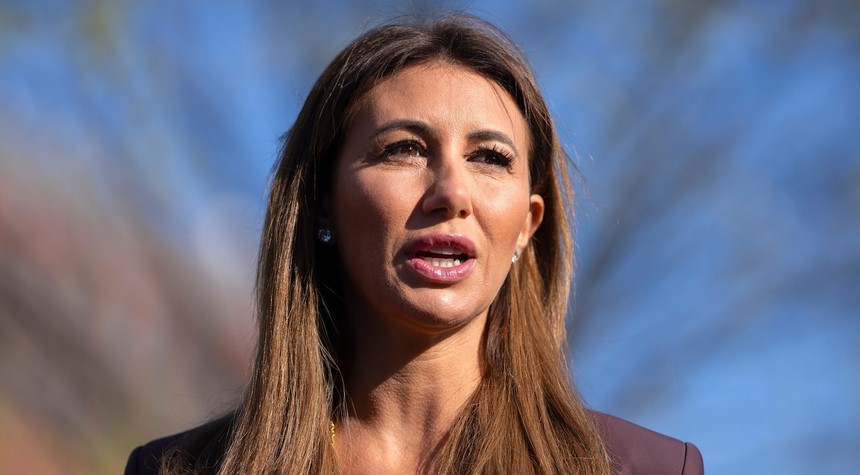
A federal appeals court has ruled that the appointment of Alina Habba as United States Attorney for New Jersey violated federal law, delivering a significant blow to the Trump administration’s personnel strategy and potentially affecting similar appointments nationwide.
The 3rd U.S. Circuit Court of Appeals issued a unanimous decision upholding a lower court ruling that found Habba’s installation as the chief federal prosecutor for New Jersey ran afoul of the Federal Vacancies Reform Act. The three-judge panel, comprising two appointees from the George W. Bush administration and one from the Biden administration, found that the administration’s approach to placing Habba in the position was legally improper.
The case centered on what a district court judge previously characterized as a “novel series of legal and personnel moves.” President Trump had nominated Habba, his former personal attorney, to serve as U.S. Attorney for New Jersey. However, when the Senate did not confirm her nomination and district court judges declined to appoint her to the position, the administration pursued an alternative path.
The administration formally withdrew Habba’s nomination and instead appointed her as First Assistant U.S. Attorney, a subordinate position. The apparent strategy was to allow her to assume the duties of the top prosecutor through this alternative route. The appeals court found this maneuver violated federal law on multiple grounds.
In its opinion, the court explained that under the Federal Vacancies Reform Act, only the first assistant who was in place at the time a vacancy occurs may automatically assume the functions and duties of the office. Since Habba was not serving in that capacity when the vacancy arose, she could not legally assume the role through this mechanism.
Furthermore, the court noted that because Habba had been formally nominated for the vacant position, the law’s “nomination bar” prevented her from serving as Acting U.S. Attorney. The court also rejected arguments that the Attorney General possessed authority to delegate the full powers of a U.S. Attorney to Habba, finding such delegation prohibited by the statute’s exclusivity provision.
This ruling represents the first time a federal appeals court has struck down the Trump administration’s attempts to maintain interim U.S. attorneys in their positions after temporary appointments expire. Legal observers suggest the decision could have nationwide implications for other federal prosecutors who were installed through similar mechanisms.
The decision follows another high-profile ruling last week that disqualified Lindsey Halligan, the administration’s chosen prosecutor for the Eastern District of Virginia. Halligan had initiated criminal proceedings against former FBI Director James Comey and New York Attorney General Letitia James before the court intervened.
The Federal Vacancies Reform Act, passed by Congress to regulate temporary appointments to executive branch positions, has become a focal point of tension between the administration and the judiciary. These court decisions underscore the judiciary’s willingness to enforce statutory limits on executive personnel decisions, even when those decisions involve key law enforcement positions.
The administration has not yet indicated whether it will seek further review of the decision or pursue alternative approaches to filling the New Jersey U.S. Attorney position.
Related: Black Friday Shopping Reaches Historic Levels Under Current Administration