
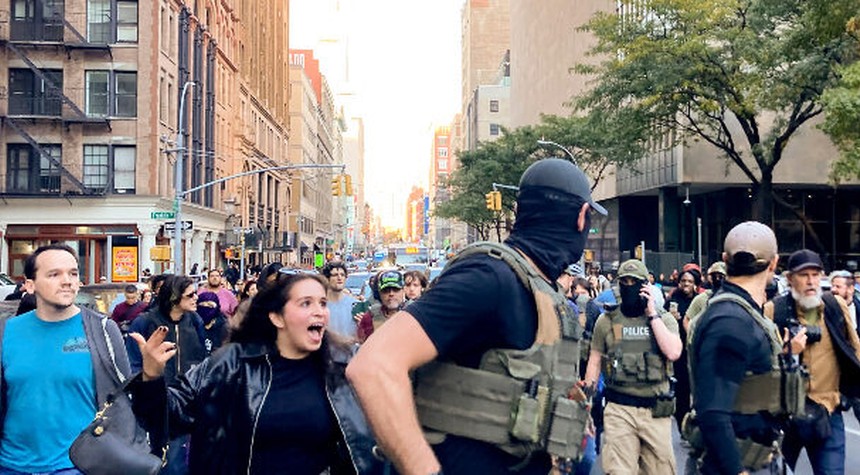
Federal law enforcement executed a decisive raid Tuesday on Canal Street in New York City’s Chinatown, targeting an extensive criminal network of illegal vendors trafficking counterfeit goods. The operation, which Democratic officials promptly criticized, demonstrated the ongoing tension between federal immigration enforcement and sanctuary city policies.
The multi-agency operation involved Immigration and Customs Enforcement (ICE), the FBI, DEA, ATF, and other federal authorities conducting what official statements described as a “targeted, intelligence-driven enforcement operation.” The raid specifically focused on dismantling organized criminal activity related to counterfeit merchandise trafficking, a persistent issue plaguing the area.
Video footage captured vendors frantically attempting to evade law enforcement, with several individuals fleeing on foot as federal agents moved to secure the area. The operation’s scope and efficiency highlighted the sophisticated nature of the criminal enterprise being targeted.
In a predictable response highlighting the deep divide between federal and local authorities on immigration enforcement, New York City Mayor Eric Adams rushed to distance his administration from the operation. Adams, continuing the city’s pattern of providing cover for illegal activities under the guise of protecting “undocumented New Yorkers,” insisted that law enforcement should focus solely on violent criminals – a false dichotomy that ignores the documented connection between counterfeit goods trafficking and organized crime.
Former Governor Andrew Cuomo, attempting to leverage the situation for his mayoral ambitions, defaulted to emotional rhetoric about the Statue of Liberty rather than addressing the legitimate law enforcement concerns at hand. His characterization of the operation as “political theater” conveniently overlooked the substantial evidence of criminal enterprise that prompted the federal response.
The raid exposed the fundamental contradiction in progressive politicians’ approach to law enforcement: while they claim to support public safety, they consistently undermine federal authorities’ efforts to enforce existing laws. This selective enforcement philosophy has contributed to the proliferation of illegal vendor networks throughout the city.
The Department of Homeland Security defended the operation as a necessary step in combating organized crime, emphasizing that the focus was on criminal activities rather than immigration status alone. This distinction, though crucial, was largely ignored by local politicians more interested in scoring political points than addressing the underlying criminal enterprises operating in their jurisdiction.
The operation serves as a reminder that federal law enforcement maintains the authority and obligation to enforce federal laws, regardless of local political resistance. The successful execution of this raid demonstrates that coordinated federal action can effectively target criminal networks, even in jurisdictions that have chosen to prioritize political positioning over law enforcement cooperation.
Related: American Chess Prodigy’s Tragic Death Highlights Online Harassment in Professional Gaming
