
FBI Director Kash Patel disclosed Wednesday that federal authorities successfully prevented four separate terrorist attacks across the United States last December, three of which were inspired by the Islamic State. The announcement came as the bureau revealed new details about ongoing counterterrorism operations that rely on both digital surveillance and traditional fieldwork.
The revelation coincides with federal indictments against two siblings connected to a suspected explosive device placed at MacDill Air Force Base in Florida. The case underscores the persistent threats facing American military installations and the challenges federal law enforcement faces in an era of international terrorism.
According to the FBI, Alen Zheng allegedly planted the device at the Tampa-area base, which serves as headquarters for United States Central Command. Zheng currently remains in China, beyond the immediate reach of American law enforcement. Federal prosecutors have indicted him on three serious charges: attempted damage of government property by fire or explosion, unlawful making of a destructive device, and possession of an unregistered destructive device.
His sister, Ann Mary Zheng, has been taken into custody by FBI agents in Tampa. She faces charges of accessory after the fact and tampering with evidence, suggesting she may have assisted her brother following the incident or attempted to obstruct the subsequent investigation.
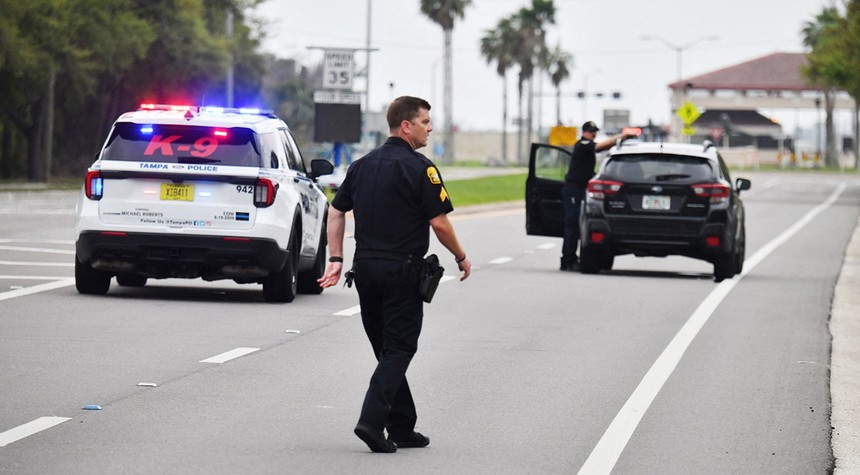
The MacDill Air Force Base incident prompted an immediate security response in March, with Tampa Police Department officers blocking traffic along South Dale Mabry Highway near the installation’s main entrance after authorities reported a suspicious package at the gate. The base houses not only Central Command but also serves as a critical hub for American military operations in the Middle East and Central Asia.
Director Patel’s announcement about the four disrupted plots represents a significant counterterrorism success for the bureau, though details about the other three incidents remain limited. The fact that three of the four plots drew inspiration from ISIS highlights the enduring threat posed by the terrorist organization, despite its territorial defeat in Syria and Iraq several years ago.
The FBI’s approach to identifying and neutralizing these threats involves comprehensive monitoring of suspects through digital channels combined with traditional surveillance methods. This dual approach has become standard practice for counterterrorism operations in the modern era, where radicalization often occurs online but requires physical action to execute attacks.
The case against the Zheng siblings raises questions about how the alleged plot was conceived and whether it represents isolated criminal activity or part of a broader network. The fact that Alen Zheng fled to China complicates prosecution efforts and may require diplomatic coordination between Washington and Beijing to secure his return to face justice.
For Americans concerned about national security, these developments offer both reassurance and sobering reminder. The FBI’s success in preventing four attacks demonstrates that federal law enforcement maintains robust capabilities to identify and stop terrorist threats before they materialize. Yet the persistence of these plots, particularly those inspired by foreign terrorist organizations, confirms that vigilance remains essential.
The investigation continues, and federal authorities have not ruled out additional arrests as they work to determine the full scope of the MacDill incident and any potential connections to the other disrupted plots from December.
Related: Boston Police Officer Faces Murder Charge After Shooting Carjacking Suspect
