
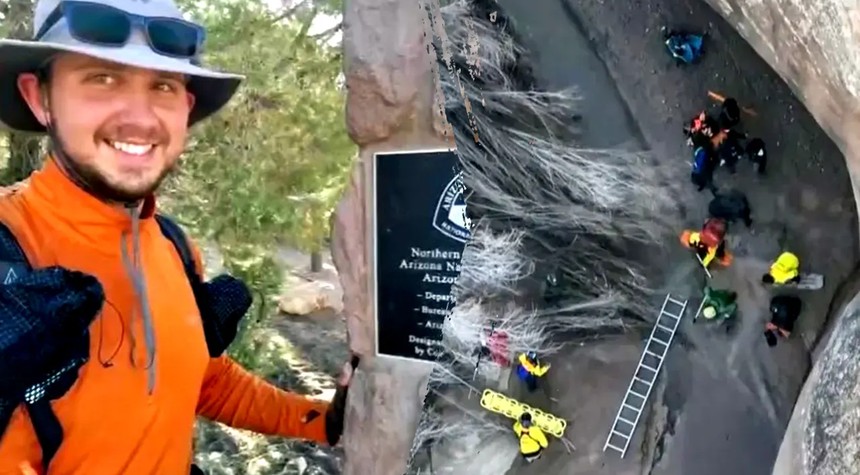
An experienced outdoorsman confronted what he described as the closest brush with death in his hiking career when he became trapped in quicksand at Utah’s Arches National Park on Sunday morning.
Austin Dirks, a seasoned desert hiker who has traversed thousands of miles of wilderness trails, was making his way through the upper end of Courthouse Wash just before sunrise when the ground beneath him gave way without warning.
“I was able to pull it out, and then I shifted all my weight to my right foot,” Dirks recounted. “And I sunk up to the knee. It felt like I had stepped into concrete, and then it hardened around my leg. I couldn’t even move it a millimeter.”
What appeared to be solid ground proved to be a deadly trap. The quicksand seized Dirks’ leg with such force that any movement became impossible. Understanding the gravity of his situation, he immediately activated a GPS satellite messenger to alert authorities to his precise coordinates.
The ordeal that followed tested the limits of human endurance. Dirks remained immobilized at a 45-degree angle in 20-degree temperatures for two hours before rescue teams could reach his remote location. The physical strain of maintaining that position, combined with the risk of hypothermia in the freezing dawn air, created a life-threatening emergency.
Relief came when Dirks spotted a rescue drone flying overhead, signaling that help had located him. Drone footage later captured the rescue operation as teams worked methodically to extract him from the quicksand’s grip in the narrow canyon.
Grand County Search and Rescue personnel successfully freed Dirks and ensured his safe return from the remote wilderness area. The incident serves as a sobering reminder that even experienced hikers can encounter unexpected dangers in America’s national parks.
“I realized that that’s the closest I’ve ever come to dying,” Dirks stated plainly. “I owe them my life.”
The rescue highlights both the unpredictable hazards present in desert environments and the critical importance of carrying emergency communication devices in remote areas. Dirks’ decision to bring a GPS satellite messenger proved to be the difference between a successful rescue and a potential tragedy.
Arches National Park, located in eastern Utah, attracts hundreds of thousands of visitors annually to view its distinctive red rock formations and natural stone arches. While the park’s trails are generally well-maintained, areas like Courthouse Wash can present hidden dangers, particularly during early morning hours when visibility remains limited and ground conditions may be difficult to assess.
The incident occurred in a season when overnight temperatures regularly drop below freezing, adding urgency to any rescue operation in the park’s backcountry.
Related: California Man Dies After Being Served 33 Drinks on Royal Caribbean Cruise
