
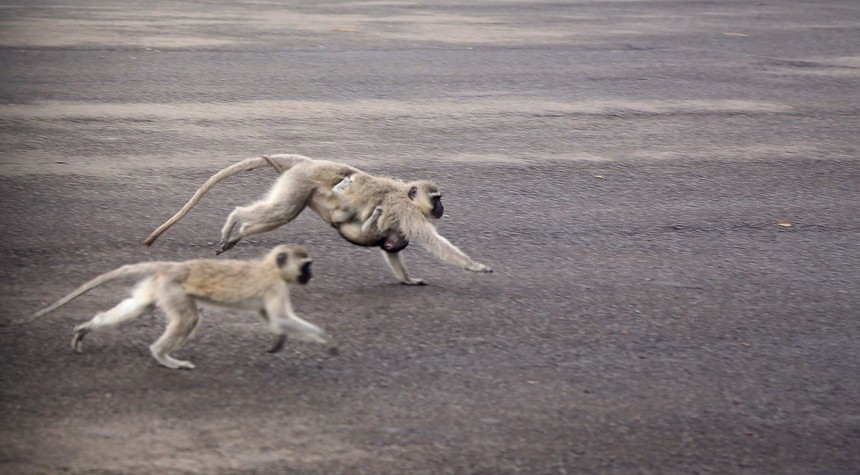
City health officials in St. Louis are continuing their search for several escaped monkeys, but their efforts have been significantly complicated by the proliferation of artificially generated photographs circulating on social media platforms.
The Vervet monkeys were first observed Thursday in the vicinity of a park in the northern section of the city. Since that initial sighting, the investigation has been hampered by what Willie Springer, spokesperson for the city’s Department of Health, characterized as a cascade of rumors and unverified claims.
As of Monday evening, the monkeys remained at large. The fundamental questions surrounding this incident remain unanswered: the identity of the animals’ owner, the circumstances of their escape, and the precise number of primates involved all remain unclear.
The search has been further complicated by individuals who have falsely claimed to have captured the animals, submitting digitally fabricated images as purported evidence. This represents a troubling new dimension in public safety incidents, where modern technology can obscure rather than illuminate the facts.
“It’s been a lot in regard to AI and what’s genuine and what’s not,” Springer said. He added that while he believes most people sharing false information mean no harm and are simply attempting to inject humor into the situation, the practice nonetheless undermines legitimate recovery efforts.
The largest number of monkeys reported in a single sighting has been four animals, according to Springer. However, officials have been unable to confirm whether all sightings refer to the same group of primates or if the actual number differs from what has been reported.
The situation is further complicated by municipal regulations. City ordinances prohibit residents from keeping Vervet monkeys as pets within city limits. This legal restriction makes it unlikely that any owner will voluntarily come forward to claim the animals, even as officials work to locate and safely capture them.
The incident raises questions about exotic animal ownership and the enforcement of existing regulations designed to prevent precisely such situations. It also highlights an emerging challenge for law enforcement and public safety officials: the need to distinguish authentic photographic evidence from artificially generated content in time-sensitive situations.
City officials continue to ask residents who observe the monkeys to report sightings through official channels rather than attempting to capture the animals themselves. Vervet monkeys, while generally not aggressive toward humans, are wild animals that may behave unpredictably when frightened or cornered.
The Department of Health has not indicated when it expects to resolve the situation, though officials remain committed to locating and safely securing all escaped animals. The incident serves as a reminder of both the responsibilities that come with exotic animal ownership and the new challenges that artificial intelligence technology presents to traditional methods of investigation and public communication.
Related: San Antonio Ends Abortion Travel Fund Following State Legal Challenge
