
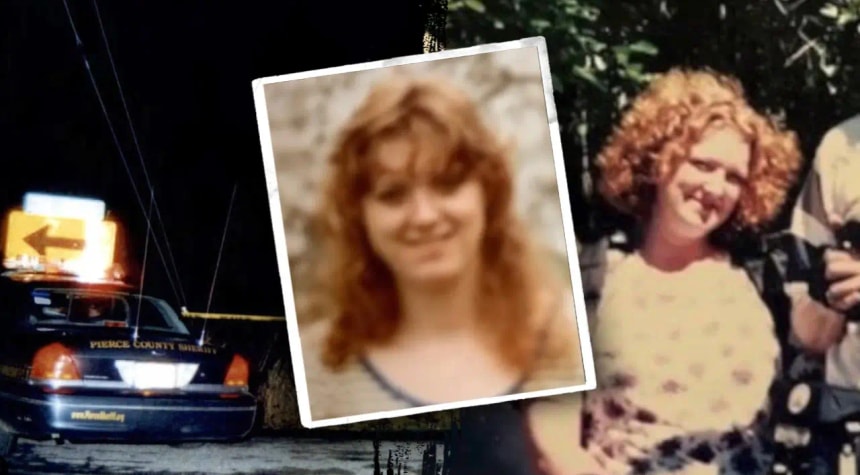
Justice has arrived, though painfully late, for the family of Sharon Van Gilder, a 39-year-old mother of two whose life was brutally taken in March 2002. Miguel Angel Urbano-Vazquez was found guilty earlier this month of aggravated first-degree murder in Van Gilder’s rape and strangulation, bringing closure to a case that has haunted investigators and family members for nearly a quarter century.
Van Gilder’s body was discovered along a rural road in Pierce County, Washington, naked and severely beaten. Investigators determined she had been strangled. She was last seen leaving a bar in Tacoma with Urbano-Vazquez and another man hours before her death.
For her cousin, Brenda Doty, the conviction represents an overwhelming relief after years of sleepless nights and unanswered questions. Van Gilder was more than a cousin to Doty. She was a close friend, a woman with whom she shared countless memories of riding horses and playing in barns during their youth.
But Van Gilder was also a hero. Doty remembers vividly the day her cousin saved her eight-year-old daughter from drowning during a family outing at a lake. Van Gilder jumped into the water without hesitation, dove beneath the surface, and pulled the child to safety. That daughter is now 40 years old, a living testament to Van Gilder’s courage and quick action.
The path to justice in this case was neither swift nor simple. According to the Pierce County Prosecutor’s Office, DNA testing in 2012 linked Van Gilder’s murder to three other rapes that occurred in the area between March and October 2002. Prosecutors have identified Van Gilder as the first victim in this series of violent sexual assaults.
The case grew more complex when Urbano-Vazquez was deported to Mexico sometime after Van Gilder’s killing. He remained abroad until his capture in 2023. The extradition process extended into 2025, when authorities were finally able to obtain a DNA sample and compare it to evidence collected from the 2002 crimes.
Doty suspects the trail of violence may extend beyond the crimes for which Urbano-Vazquez has been convicted. Given his violent nature and the years he spent in Mexico after Van Gilder’s death, she believes there may be additional victims whose stories have yet to be told.
The trial itself proved emotionally wrenching for all involved. Three survivors of Urbano-Vazquez’s attacks took the witness stand, recounting experiences from nearly a quarter century ago. Doty expressed profound admiration for their courage in facing their attacker in court.
These women’s testimonies proved instrumental in securing the guilty verdict. After each survivor left the courtroom, Doty and other family members embraced them, offering words of support and gratitude. Their willingness to relive traumatic events provided the jury with critical evidence of Urbano-Vazquez’s pattern of violence.
Under Washington state law, the conviction for aggravated murder carries a mandatory sentence of life in prison without the possibility of parole. Urbano-Vazquez is scheduled to be sentenced on December 11.
This case serves as a reminder of both the limitations and the possibilities of our justice system. DNA technology that was unavailable or underutilized at the time of Van Gilder’s death eventually provided the evidence necessary to link her murder to a series of assaults and to identify her killer definitively. Yet the years lost, the deportation that allowed a violent criminal to escape accountability, and the possibility of additional victims in Mexico raise difficult questions about gaps in law enforcement cooperation across international borders.
For the Van Gilder family, however, the focus remains on remembering a woman who lived with courage and died far too young. The guilty verdict cannot restore what was taken, but it affirms that Sharon Van Gilder’s life mattered and that justice, though delayed, has finally been served.
Related: Kai Trump Receives Coaching From Tiger Woods as She Recovers From Wrist Surgery
