
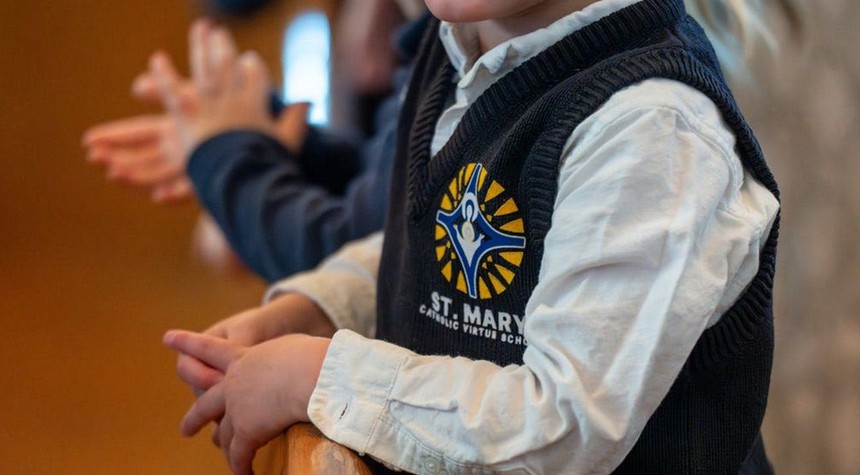
A Colorado family’s struggle to access publicly funded preschool benefits has reached the nation’s highest court, raising fundamental questions about religious liberty and equal treatment under state education programs.
Erika Nagle, a mother of three from Littleton, Colorado, reports that her family was denied approximately $12,000 in state preschool funding because she enrolled her children at St. Mary Catholic School. The denial, she maintains, represents clear discrimination against religious families in a program the state has promoted as universal in scope.
The case arrives before the Supreme Court on Tuesday as Catholic institutions challenge Colorado’s preschool funding structure, arguing that participation requirements place unfair burdens on religious schools’ admissions practices and core beliefs.
Colorado launched its universal preschool program in 2023, offering eligible families approximately $6,300 per child to cover fifteen hours of weekly preschool instruction. According to legal advocacy organization Becket, state officials promoted the program as a universal benefit that would permit parents to select from public, private, and religious preschool options. This representation prompted Catholic families throughout Colorado to apply for participation.
The reality, according to Nagle, proved markedly different. Two of her children were denied access to the funding, leaving her family responsible for thousands of dollars in additional education expenses that other Colorado families receiving state assistance do not bear.
The implications extend beyond individual family budgets. Nagle reports that two preschools within the archdiocese have closed their doors, suggesting the program’s structure may be affecting Catholic school enrollment across the state. She characterizes the situation as state incentivization for families to abandon the religious education they prefer for their children.
The admissions question stands at the heart of the legal dispute. Nagle observes that nearly every educational institution maintains admissions criteria reflecting the community it serves. Some schools prioritize children from specific neighborhoods. Others focus on particular populations, whether students with special needs, those from low-income backgrounds, or other designated groups. St. Mary Catholic School, she explains, prioritizes Catholic families while remaining open to students whose families respect the school’s religious teachings.
The question before the court is whether such religiously informed admissions practices should disqualify an institution from participating in what the state describes as a universal public benefit.
For families like the Nagles, who deliberately chose Catholic education for their children, the exclusion carries particular weight. They find themselves paying taxes that fund benefits they cannot access, solely because of their religious educational choice.
The broader context involves long-standing constitutional questions about religious freedom and equal access to government programs. Previous Supreme Court decisions have addressed whether states may exclude religious institutions from generally available public benefits, with recent rulings trending toward requiring equal treatment.
As oral arguments proceed, the outcome will likely establish precedent affecting not only Colorado’s program but similar state education initiatives nationwide. The central question remains straightforward: When a state offers universal benefits for education, may it exclude families who choose religious schools, or does such exclusion constitute impermissible discrimination based on religious exercise?
The answer will determine whether families like the Nagles receive equal treatment or remain excluded from benefits their tax dollars help fund.
Related: Dual Citizen Extradited to Face Femicide Charges in Death of Toddler’s Mother
