
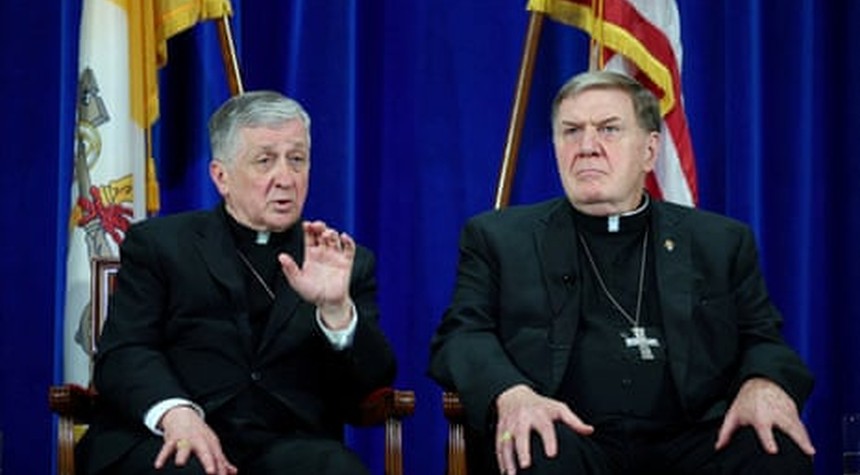
Three prominent leaders of the Catholic Church in America have issued a pointed criticism of the Trump administration’s recent foreign policy decisions, warning that actions regarding Greenland, Venezuela, and humanitarian aid reductions threaten to destabilize international relations and cause widespread human suffering.
Cardinal Blase Cupich of Chicago, Cardinal Robert McElroy of Washington, and Cardinal Joseph Tobin of Newark released a joint statement Monday expressing grave concerns about the direction of American diplomacy. The statement, while not mentioning President Trump by name, left little doubt about its target.
“Our country’s moral role in confronting evil around the world, sustaining the right to life and human dignity, and supporting religious liberty are all under examination,” the cardinals wrote. They continued, “And the building of just and sustainable peace, so crucial to humanity’s wellbeing now and in the future, is being reduced to partisan categories that encourage polarization and destructive policies.”
The three prelates called for a foreign policy framework that prioritizes human life, religious liberty, and human dignity, particularly through economic assistance to nations in need. Their statement explicitly rejected the use of military force except as a last resort in extreme circumstances, arguing against war as an instrument of narrow national interests.
This represents the second significant intervention by Catholic leadership into political matters in recent months. In November, the United States Conference of Catholic Bishops collectively condemned the administration’s mass deportation campaign and what they characterized as the vilification of immigrants used to justify such policies. The Catholic Church counts more than 50 million members in the United States.
The timing of the cardinals’ statement follows several controversial foreign policy developments. The administration has pursued efforts to obtain Greenland, launched military action in Venezuela, and implemented substantial cuts to foreign aid programs in the opening weeks of the president’s second term.
The January 3rd pre-dawn operation in Caracas, which resulted in the capture of Venezuelan dictator Nicolás Maduro on drug-related charges, drew particular attention from the church leaders. While the removal of Maduro addresses legitimate concerns about narcotics trafficking and authoritarian rule, the cardinals appear troubled by the method and broader implications of such unilateral military action.
Pope Leo XIV, the first American-born pontiff in the church’s history, echoed similar concerns during a January 9th address at the Vatican. Speaking less than a week after the Venezuela operation, the Pope observed that traditional diplomacy promoting dialogue and consensus appeared to be giving way to force-based approaches.
“War is back in vogue and a zeal for war is spreading,” Pope Leo stated. “Peace is sought through weapons as a condition for asserting one’s own dominion. This gravely threatens the rule of law, which is the foundation of all peaceful civil coexistence.”
The cardinals’ statement raises fundamental questions about America’s role in global affairs and the proper balance between national interests and international stability. Their intervention represents a significant challenge from an institution with considerable moral authority among millions of American voters.
Whether this ecclesiastical criticism will influence administration policy remains uncertain. What is clear is that the Catholic Church’s leadership has determined that remaining silent on these matters would constitute a dereliction of their pastoral and moral responsibilities.
The statement underscores growing tensions between traditional conservative values regarding human dignity and life, and an increasingly assertive foreign policy approach that prioritizes American interests through displays of military strength and reduced international engagement.
Related: Hiker Dies Searching for Lost Friends in Remote Southern California Mountains
