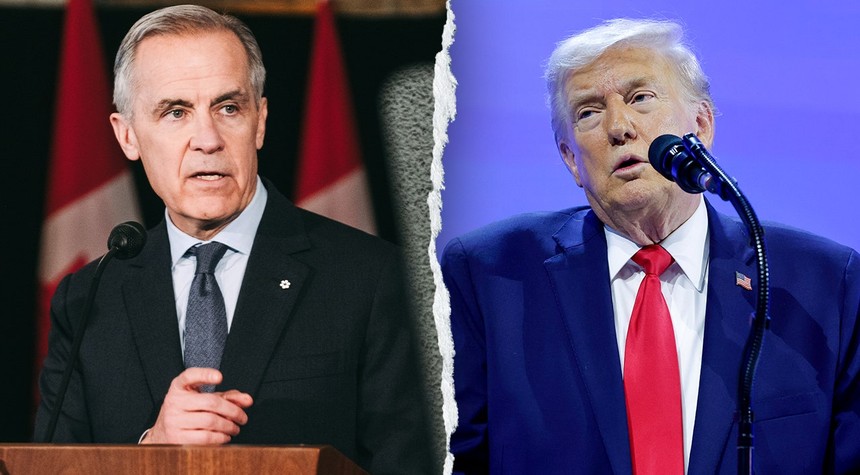
Canadian Prime Minister Mark Carney has firmly rejected President Donald Trump’s recent assertion that “Canada lives because of the United States,” marking a significant escalation in tensions between the two neighboring nations.
Speaking Thursday during a cabinet retreat at the Plains of Abraham in Québec, Carney addressed Trump’s remarks directly and without equivocation. “Canada and the United States have built a remarkable partnership in the economy, in security, and in a rich cultural exchange,” Carney stated. “But Canada doesn’t ‘live because of the United States.’ Canada thrives because we are Canadian. We are masters in our own house. This is our country. This is our future. The choice is ours.”
The exchange represents more than mere diplomatic posturing. It reflects a fundamental disagreement about the nature of the relationship between these two nations, which share the world’s longest international border and conduct hundreds of billions of dollars in trade annually.
President Trump responded swiftly to Carney’s remarks. On Thursday, he published an open letter on Truth Social informing the Canadian Prime Minister that Canada’s invitation to join the Board of Peace had been withdrawn. This board, a United States-led council tasked with managing Gaza’s post-war reconstruction and future governance, was described by Trump as “the most prestigious Board of Leaders ever assembled, at any time.”
“Please let this Letter serve to represent that the Board of Peace is withdrawing its invitation to you regarding Canada’s joining, what will be, the most prestigious Board of Leaders ever assembled, at any time. Thank you for your attention to this matter,” Trump wrote.
The board was formally inaugurated in Davos, Switzerland, on Thursday, though Carney had already departed from the World Economic Forum by that time.
These tensions did not emerge in isolation. Both leaders attended the annual World Economic Forum in Davos this week, where they delivered speeches that contained pointed references to one another. The disagreement appears rooted in broader questions about trade relationships, security cooperation, and the degree of interdependence between the two nations.
The diplomatic dispute comes at a particularly sensitive time for North American relations. Canada and the United States have maintained one of the world’s most stable and productive bilateral relationships for decades, cooperating extensively on defense through NORAD, on trade through the United States-Mexico-Canada Agreement, and on numerous other fronts.
The White House, when asked for comment on Carney’s remarks, directed inquiries to Trump’s Truth Social post, suggesting the administration considers the matter addressed through the President’s public statements.
What remains unclear is whether this represents a temporary diplomatic friction or signals a more fundamental shift in how the United States and Canada will conduct their relationship going forward. Historical precedent suggests that disagreements between Washington and Ottawa, while not uncommon, are typically resolved through diplomatic channels rather than public exchanges.
The situation bears watching as both nations navigate what appears to be an increasingly complicated partnership in an uncertain global environment.
Related: Former Olympic Snowboarder and Alleged Drug Kingpin Captured in Mexico