
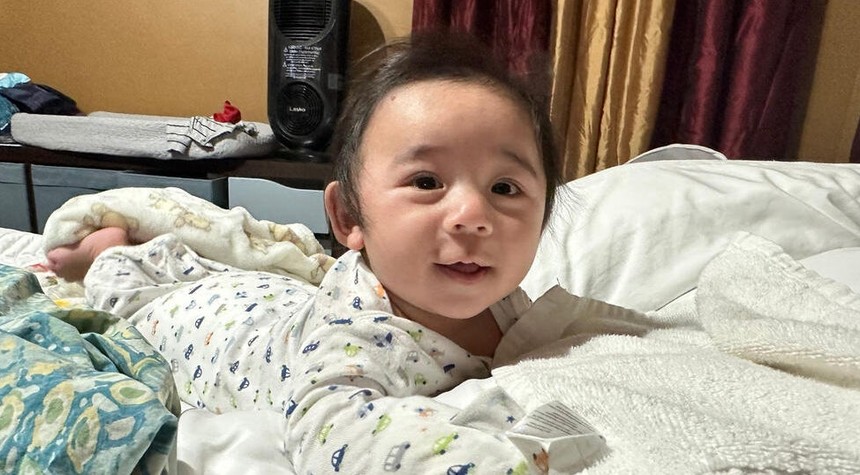
In what medical professionals are calling an almost unprecedented case, a California infant has survived a pregnancy that occurred entirely outside his mother’s womb, defying odds that physicians estimate at far less than one in a million.
Suze Lopez, a 41-year-old nurse from Bakersfield, gave birth to her son Ryu at Cedars-Sinai Medical Center in Los Angeles after discovering she was pregnant just days before delivery. The child had developed in his mother’s abdomen, concealed by a basketball-sized ovarian cyst that doctors had been monitoring for nearly two decades.
The circumstances surrounding this birth represent such an exceptional medical occurrence that the attending physicians plan to document the case in a medical journal. According to Dr. John Ozimek, medical director of labor and delivery at Cedars-Sinai, only one in 30,000 pregnancies occur in the abdomen rather than the uterus. Those that reach full term are virtually unheard of in modern medical literature.
Lopez had been living with the large ovarian cyst since her twenties, when doctors removed her right ovary and another cyst but left the remaining mass in place. When her abdomen began expanding earlier this year, she attributed the growth to the existing cyst rather than pregnancy. She experienced none of the typical signs of expectancy, including morning sickness or fetal movement. Her irregular menstrual cycle, which sometimes ceased for years at a time, provided no indication that anything unusual was occurring.
For months, Lopez and her husband Andrew continued their normal routines, including international travel. However, as abdominal pain and pressure intensified, Lopez decided it was time to have the cyst surgically removed. The procedure required a CT scan, which in turn necessitated a pregnancy test due to radiation exposure concerns. The positive result came as a complete shock.
Lopez shared the unexpected news with her husband during a Dodgers baseball game in August. Shortly thereafter, she began experiencing severe symptoms and sought medical attention at Cedars-Sinai. Medical staff discovered dangerously elevated blood pressure, which they worked quickly to stabilize.
Subsequent imaging revealed an empty uterus but located a nearly full-term fetus in an amniotic sac positioned in a small space within Lopez’s abdomen, near her liver. Dr. Ozimek noted that the pregnancy appeared to be implanted primarily on the sidewall of the pelvis rather than directly invading major organs, a circumstance that, while still extremely dangerous, proved more manageable for surgical intervention.
Dr. Cara Heuser, a maternal-fetal specialist in Utah not involved with the case, explained that pregnancies implanting outside the uterus, known as ectopic pregnancies, typically rupture and hemorrhage if not promptly removed. Such pregnancies most commonly occur in the fallopian tubes and are considered medical emergencies.
The successful delivery of baby Ryu represents a remarkable outcome in a situation that medical professionals consider extraordinarily perilous. The case underscores both the unpredictability of human biology and the capabilities of modern medical intervention when confronted with the rarest of circumstances.
Related: Mexican Navy Medical Plane Crashes Near Galveston, Killing at Least Five
