
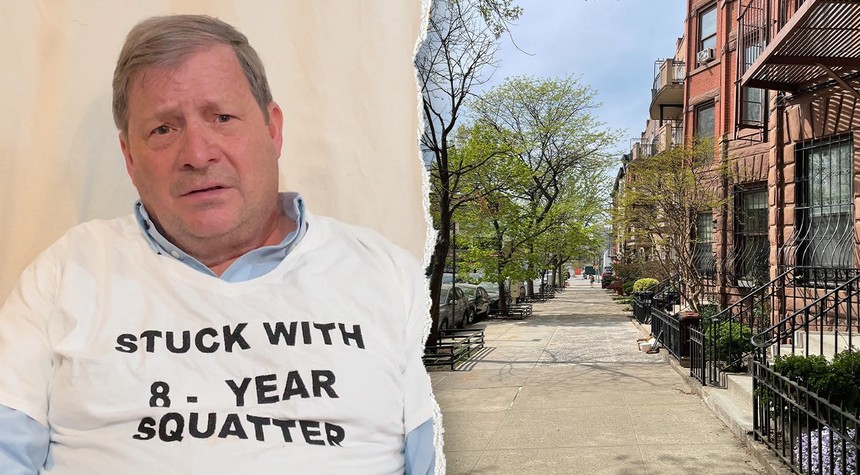
A Brooklyn property owner finds himself mired in what he describes as a legal nightmare that has stretched across nearly a decade, costing him hundreds of thousands of dollars while New York’s court system has repeatedly delayed resolution of his case.
Thomas Diana owns a modest eight-unit residential building in the Park Slope neighborhood. For the past nine years, he has been attempting to remove a tenant who has not made direct rent payments to him, yet continues to occupy one of his apartments while the legal process grinds forward at what he characterizes as an agonizingly slow pace.
The situation began when a woman moved into one of Diana’s apartments as a live-in companion for an elderly, disabled tenant. Court records confirm this arrangement. What followed has been a protracted legal battle that has drained Diana’s finances and taken a severe toll on his personal life.
The case highlights growing concerns about the balance of power between landlords and tenants in New York City, where housing court procedures and tenant protection laws have created a system that some property owners say leaves them with little recourse when disputes arise.
Diana’s predicament is particularly acute because he operates a small building with just eight units. Unlike large property management companies with deep pockets and legal departments, individual landlords of modest buildings often lack the resources to sustain lengthy court battles. The accumulation of unpaid rent over nine years, combined with mounting legal fees, represents a financial burden that threatens the viability of small-scale property ownership.
The delays in New York’s court system have compounded the problem. Each postponement extends the period during which Diana receives no rental income from the unit while still bearing the costs of property taxes, maintenance, and utilities for the building.
This case raises important questions about the effectiveness of New York’s housing court system and whether current procedures adequately serve the interests of justice for all parties involved. While tenant protections serve vital purposes in preventing wrongful evictions and maintaining housing stability, cases like Diana’s suggest that the pendulum may have swung too far in one direction, leaving property owners without timely legal remedies.
The broader implications extend beyond one landlord’s struggle. If small property owners cannot resolve tenant disputes in a reasonable timeframe, they may be forced to sell their buildings to larger corporate entities or exit the rental market entirely. This consolidation could ultimately reduce housing diversity and the kind of personal landlord-tenant relationships that often characterize smaller buildings.
As Diana continues his legal fight, his case serves as a stark illustration of the challenges facing individual property owners navigating New York’s complex housing regulations and overburdened court system.
Related: Four Inmates Escape Alabama Correctional Facility, Manhunt Underway
