
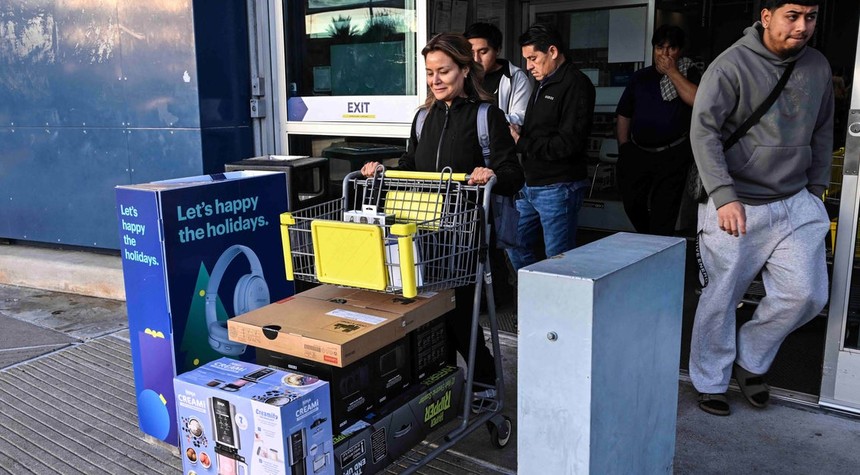
American consumers demonstrated remarkable spending power over the Thanksgiving weekend, even as economic uncertainty continues to cloud their outlook for the months ahead.
Black Friday shoppers spent $11.8 billion online on November 28, representing a 9.1 percent increase from the previous year, according to Adobe Analytics. When in-store purchases are included, Mastercard SpendingPulse reported that Americans spent 4.1 percent more than they did during the same period last year.
Cyber Monday projections suggest this trend will continue, with Adobe forecasting a record $14.2 billion in online spending, marking a 6 percent increase over last year’s figures.
These numbers tell a story of consumer resilience in the face of significant economic headwinds. The American economy continues to navigate challenges including increased costs from recent tariff implementations and a wave of corporate layoffs as the labor market shows signs of cooling.
However, a closer examination of the data reveals a more complex picture beneath these record-breaking sales figures.
According to Salesforce.com, retailers offered less generous discounts this year compared to previous holiday seasons. The average selling price of goods rose 7 percent from a year ago, while consumers purchased 2 percent fewer items per transaction.
Neil Saunders, an analyst at GlobalData, explained the significance of these trends. Much of the growth in retail sales stems from higher prices rather than increased volume of purchases. Retail volume growth stands at approximately 0.3 percent this year, a figure that represents historically weak performance. This explains why many consumers feel their purchasing power has diminished, even as they continue to spend.
Inflation rose to 3 percent in September on an annual basis, according to the Consumer Price Index, up from a low of 2.3 percent in April. This uptick in inflation has forced many households to adopt more strategic shopping behaviors, focusing on select high-value purchases or spreading their buying across multiple promotional periods to maximize value.
The importance of consumer spending to the American economy cannot be overstated. It accounts for approximately 70 percent of the nation’s gross domestic product, making retail performance a critical indicator of overall economic health.
Consumer confidence fell to its lowest point since April last month, raising questions about whether the holiday shopping season would provide relief or disappointment for retailers. Many Americans face an affordability squeeze, with costs rising across categories from groceries to utilities. Deloitte’s 2025 holiday study found that three-quarters of shoppers anticipated higher prices during the holiday season.
The distribution of spending reveals another important trend. High-income households have driven much of the consumer spending in 2025, with the top 10 percent of earners accounting for nearly half of all spending in the second quarter, according to analysis of Federal Reserve data by Mark Zandi, chief economist at Moody’s Analytics.
Spending among the bottom 80 percent of households, those earning less than $175,000 annually, has merely kept pace with inflation, suggesting that the majority of American families are maintaining their standard of living rather than improving it.
As the holiday season progresses, these trends will continue to shape the economic landscape and provide insight into the financial health of American households heading into the new year.
Related: Federal Appeals Court Blocks Habba Appointment as New Jersey US Attorney
