
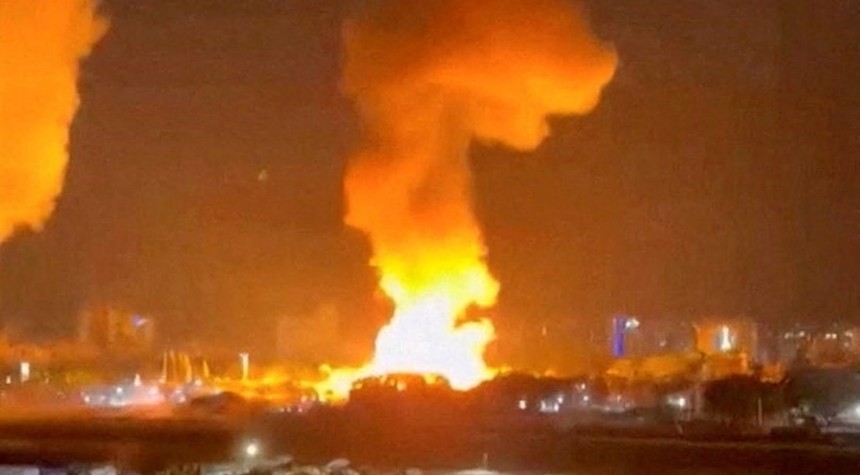
Explosions echoed through the streets of Caracas in the predawn hours of Saturday as American military forces conducted what President Donald Trump described as a large scale strike against Venezuela. The operation resulted in the capture of Venezuelan President Nicolas Maduro and his wife, who were subsequently removed from the country.
The president announced the military action on his social media platform shortly before 4:30 a.m. Saturday, several hours after witnesses in the Venezuelan capital reported hearing multiple explosions. Photographs and video footage from the scene showed plumes of smoke rising into the night sky and a large fireball illuminating the darkness.
The operation, which Trump characterized as “extremely complex” and executed with “speed and violence,” involved what sources described as elite military units including Delta Force, operating in support of a law enforcement mission. While there were no immediate reports of American military deaths, the president and Senator Tom Cotton, chairman of the Senate Intelligence Committee, confirmed that some American personnel sustained injuries during the operation and that a helicopter was struck.
“I spoke with Secretary Rubio this morning. He did share that we did have wounded personnel, but no killed, but that is never guaranteed in advance,” Senator Cotton stated.
In remarks from Mar-a-Lago, President Trump outlined an unprecedented plan for American involvement in Venezuela’s governance. The president stated that the United States would “run” Venezuela for an unspecified period of time, citing the absence of suitable leadership to assume control following Maduro’s removal.
“We’ll run it properly. We’ll run it professionally. We’ll have the greatest oil companies in the world go in and invest billions and billions of dollars and take out money, use that money in Venezuela, and the biggest beneficiary are going to be the people of Venezuela,” the president said.
The announcement represents a significant departure from Trump’s campaign rhetoric emphasizing an “America First” approach and opposition to foreign entanglements. The president indicated that American troops could be deployed to Venezuela and suggested that a team comprising Cabinet officials and local Venezuelan representatives would oversee the country’s administration.
“We’re not afraid of boots on the ground,” Trump declared, adding that the United States stood prepared to execute a “much bigger” second wave of attacks if circumstances warranted such action.
The operation has generated immediate political controversy. Senate Minority Leader Chuck Schumer issued a sharp rebuke of the president’s plans, warning that direct American governance of Venezuela should alarm all citizens.
“The idea that Trump plans to now run Venezuela should strike fear in the hearts of all Americans,” Schumer said. “The American people have seen this before and paid the devastating price.”
The military action follows a period of escalating tensions between the United States and the Maduro regime, including questions surrounding recent maritime strikes targeting vessels allegedly involved in drug trafficking operations.
The full scope of the operation and its long-term implications for American foreign policy remain to be seen. What is clear is that the United States has undertaken its most significant military intervention in Latin America in decades, with consequences that will likely reverberate throughout the hemisphere for years to come.
Related: Fatal Mountain Lion Attack Suspected in Colorado, First in Nearly Three Decades
