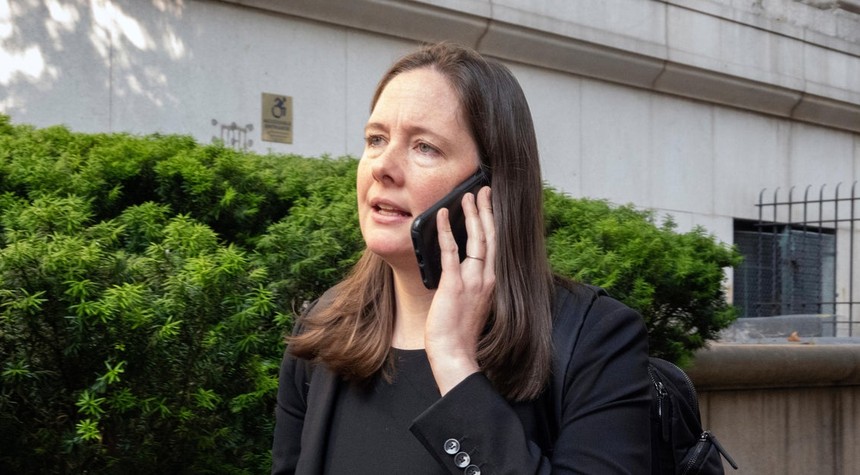
A federal judge has determined that the Justice Department acted unlawfully when it terminated Maurene Comey from her position as a federal prosecutor in the Southern District of New York, dealing a significant blow to executive branch authority claims.
U.S. District Judge Jesse Furman issued a 55-page decision Monday finding that Comey’s removal violated both the constitutional separation of powers and federal law. The court has retroactively reinstated Comey to her role and ordered the administration to provide back pay from her July 2025 dismissal through December 20, when she accepted alternative employment.
Comey, daughter of former FBI Director James Comey, had served as a federal prosecutor in Manhattan since 2015. Her tenure included work on several high-profile criminal cases involving prominent figures such as Sean “Diddy” Combs, Jeffrey Epstein, Ghislaine Maxwell, and former Democratic Senator Robert Menendez.
The case represents one of several legal challenges filed by former government employees testing the boundaries of presidential authority to dismiss federal officials without cause. The Trump administration had maintained that Article II of the Constitution grants the president unrestricted removal power, arguing that Congress lacks authority to limit the dismissal of federal prosecutors.
Judge Furman rejected this interpretation decisively. His ruling determined that Comey’s termination violated the Civil Service Reform Act, the landmark 1978 legislation establishing protections for federal workers. The administration’s position, Furman wrote, attempts to “upend” well-established legal precedent permitting Congress to regulate the removal of inferior officers.
“Indeed, to accept Defendants’ argument would be to unsettle the very equilibrium established by this Nation’s constitutional system,” the judge stated in his opinion.
At the time of her dismissal, Comey informed former colleagues that she had been “summarily fired via memo” from Justice Department headquarters in Washington without explanation. The termination letter cited only Article II of the Constitution and stated her employment was terminated effective immediately.
Initially, the identity of who ordered Comey’s removal remained unclear. However, in May, the Trump administration disclosed that then-Attorney General Pam Bondi had directed the termination, which was subsequently ratified by her successor, Todd Blanche.
Comey’s legal representatives characterized the decision as a hard-earned victory with implications extending beyond their client. “This decision reaffirms our bedrock system of checks and balances: the President is not above the law,” attorneys Ellen Blain, Nicole Gueron, Deepa Vanamali, and Margaret Donovan stated.
The Justice Department has indicated its intention to challenge the ruling. A department spokesperson stated the government “disagrees with this decision and will appeal in due course.”
The case raises fundamental questions about the scope of executive authority and the protections afforded to career civil servants. Judge Furman’s decision reinforces the principle that congressional statutes limiting presidential removal power remain constitutionally valid, a position that will likely face further scrutiny as the case proceeds through the appellate system.
Related: Beloved Star Trek Actor Walter Koenig Passes Away in Los Angeles