
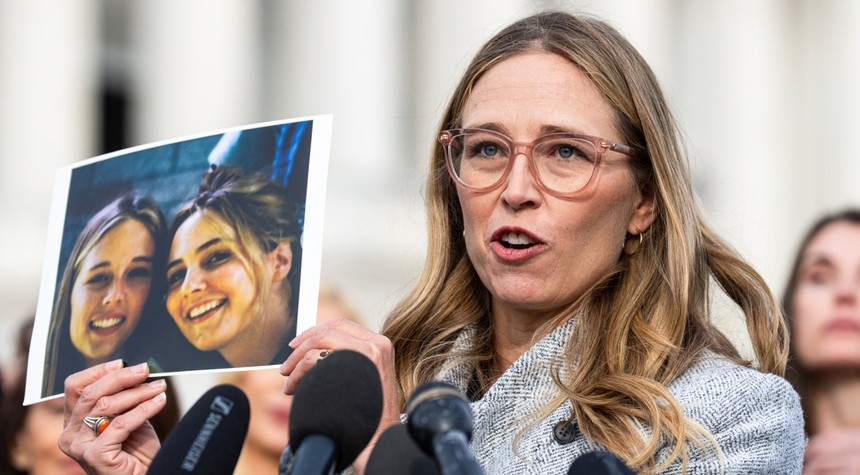
Annie Farmer, recognized as one of the first women to expose Jeffrey Epstein’s crimes, has publicly supported former Ohio State University students in their effort to remove billionaire Leslie Wexner’s name from campus buildings.
Farmer’s statement comes in the wake of a protracted legal battle between the university and hundreds of men who alleged that Ohio State failed to protect them from sexual abuse by campus physician Dr. Richard Strauss. That lawsuit, which concluded with a settlement in June, centered on allegations that the university turned a blind eye to Strauss’s predatory behavior over multiple decades, during which he allegedly assaulted students under the pretense of conducting routine physical examinations.
The connection drawing Farmer’s attention is significant. Wexner, an Ohio billionaire who once provided substantial financial backing to Epstein, served on the Ohio State Board of Trustees during the period when Strauss was actively abusing students, from 1978 through 1998. The Strauss survivors have repeatedly emphasized this timeline in their campaign to remove Wexner’s name from university property.
“Hundreds of students and alumni have made it clear that they do not want Wexner’s name on their buildings, including many of the brave athletes who are survivors of Richard Strauss,” Farmer stated in written responses to questions. She raised particular concern about current university protocol. “If you are an OSU student who has been a victim of a sexual assault, you are currently directed to go to the Wexner Medical Center for an exam. That is highly problematic.”
Farmer’s testimony carries considerable weight. In 1996, at sixteen years old, she accepted what she believed was an educational opportunity at Epstein’s New Mexico ranch, only to be sexually assaulted by both Epstein and his associate Ghislaine Maxwell. Her testimony proved instrumental in Maxwell’s 2021 conviction on sex trafficking charges. Maxwell is currently serving a twenty-year prison sentence.
Epstein himself faced sex trafficking charges in 2019 but died in a New York City jail cell before trial. Authorities ruled his death a suicide.
Farmer was in Columbus as part of a traveling public art installation, the Donald J. Trump and Jeffrey Epstein Memorial Reading Room, which displays millions of pages of partially redacted Department of Justice documents related to the Epstein case. President Trump, who knew Epstein socially in earlier years, has never been accused by authorities of wrongdoing in connection with Epstein’s crimes and has denied any impropriety.
The billionaire’s name currently appears on three major university facilities: the Les Wexner Football Complex, the Wexner Center for the Arts, and the Ohio State University Wexner Medical Center.
University spokesperson Benjamin Johnson acknowledged that the institution has received renaming requests concerning Wexner and that these requests remain under review through an established university process. Representatives for Wexner declined to comment.
Farmer drew parallels between the experiences of Epstein’s hundreds of victims and those of the young men targeted by Strauss during his two decades at Ohio State. Both cases, she suggests, represent systemic failures by institutions to protect vulnerable individuals from predatory behavior by powerful men operating within their spheres of influence.
The question now before Ohio State is whether the association with Wexner, given his connection to Epstein and his presence on the board during the Strauss era, warrants the removal of his name from university buildings. That decision will test the institution’s commitment to acknowledging the concerns of abuse survivors.
Related: Goldman Sachs CEO Among Top Executives Set to Collect $500 Million in Stock Awards
