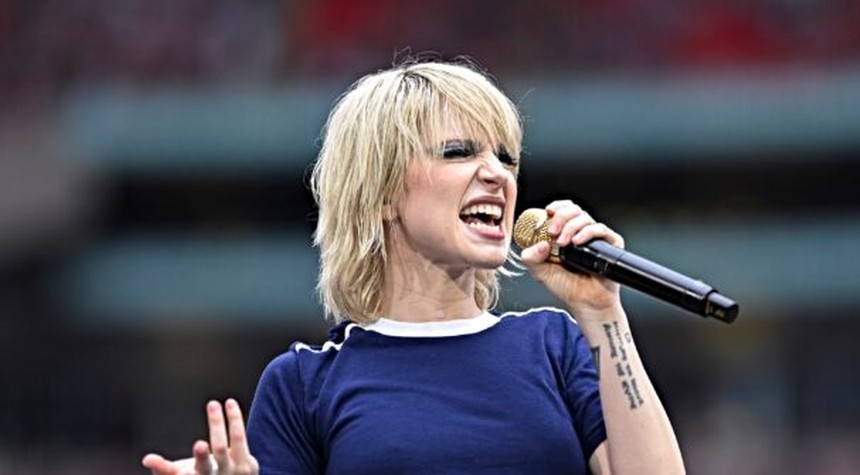
Pop singer Hayley Williams, best known as the lead vocalist of rock band Paramore, delivered pointed political commentary during a Sunday concert, declaring Christian nationalism to be the primary threat facing American democracy.
Williams made the statement during her solo tour, The Hayley Williams Show, while performing her song “True Believer.” Video footage of the moment has since circulated on social media platforms.
This represents the latest in a series of political statements the 37-year-old performer has made from the stage. The pattern extends back several years and has become a recurring feature of her live performances.
In 2023, Williams directed criticism at Florida Governor Ron DeSantis and his supporters. More recently, at the start of her fall tour at the iTHINK Financial Amphitheater in West Palm Beach, Florida, she used profanity to express opposition to former President Donald Trump, telling attendees to stay safe and look out for one another before adding the explicit comment.
During a May performance at the Fox Theater in Oakland, California, Williams interjected political statements while performing her 2025 song “Ice In My OJ.” She expressed opposition to Immigration and Customs Enforcement and voiced support for Palestine during the performance.
The singer has faced her own controversies. In 2024, Williams was accused of fostering a toxic workplace environment. That same year, she interrupted a performance to deliver what observers characterized as a partisan speech, claiming without supporting evidence that President Trump sought to punish economically disadvantaged Americans.
The frequency and intensity of Williams’ political commentary during paid performances raises questions about the appropriate venue for such statements. Concert attendees, many of whom purchase tickets primarily to hear music, find themselves subjected to political messaging that may not align with their own views or expectations for the evening.
The broader trend of entertainers using their platforms for political advocacy has become increasingly common in recent years. While performers certainly retain the right to express their views, the practice of incorporating explicit political statements into concerts has proven divisive among audiences.
Williams’ specific targeting of Christian nationalism as the paramount threat to democracy represents a particular perspective that many Americans, particularly those with traditional religious values, would contest. The statement reflects a viewpoint more aligned with progressive political circles than with mainstream American thought on matters of faith and governance.
As entertainment and politics continue to intersect, performers like Williams face the challenge of balancing artistic expression with the diverse viewpoints of their audience. The decision to make concerts a platform for political commentary remains a calculated choice that inevitably alienates some ticket buyers while energizing others.
Related: How Rudy Giuliani Changed the Fight Against Organized Crime in New York