
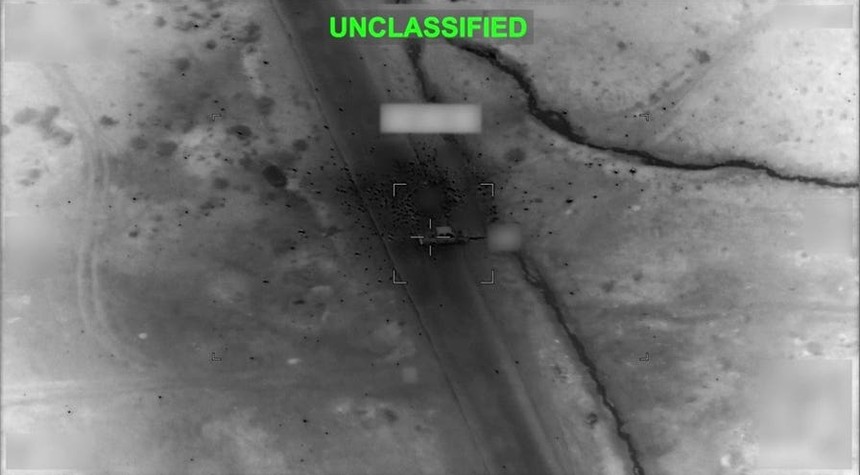
The United States military on Tuesday released extraordinary footage documenting one of the most extensive combat search-and-rescue operations in American military history, showing the moment elite Air Force pararescue operators reached a severely injured American airman who had been stranded deep inside Iranian territory.
The video captures portions of the massive April operation to rescue the two-man crew of an F-15E Strike Eagle, designated by the call sign Dude 44, after Iranian forces shot down the fighter with a shoulder-fired missile. The pilot, identified as Dude44 Alpha, and the weapons systems officer in the rear seat, Dude44 Bravo, ejected from the aircraft and landed several miles apart, leaving both men isolated in hostile territory.
The rescue of Dude44 Alpha proceeded relatively swiftly, with American forces extracting him after slightly more than six hours. Dude44 Bravo faced far graver circumstances. A malfunctioning parachute caused a hard landing that left him with a broken back, arm, and shoulder. He would remain stranded for nearly two full days before U.S. forces could reach his position.
The newly released footage shows American military helicopters systematically searching for Bravo while U.S. forces worked to pinpoint his location. Despite his severe injuries, Bravo demonstrated remarkable fortitude by moving away from his initial landing site and climbing toward a mountain ridgeline approximately 7,000 feet in elevation. As daylight revealed the stark desert valley and steep cliffs surrounding his position, the airman continued his ascent to more defensible terrain.
The video also documents American bombers and unmanned aircraft striking Iranian Revolutionary Guard forces that had moved into proximity of Bravo’s location. General Dan Caine, Chairman of the Joint Chiefs of Staff, confirmed the Iranian military’s aggressive posture during the incident. “There was clear intent out of the Iranian ground force to come find those two guys,” Caine stated this week.
The most dramatic footage shows the moment on April 5 when two elite Air Force pararescue operators, known within the military as PJs, finally reached the injured Bravo on the mountain ridgeline. The complex operation involved two large search-and-rescue aircraft landing on an improvised desert runway before smaller helicopters, known as Little Birds, flew toward Bravo’s elevated position.
For the stranded airman, the sight of his rescuers arriving represented the culmination of a nearly 48-hour ordeal in enemy territory. Bravo later described the moment as “one of the greatest moments of my life.” His immediate response to his rescuers was simple and direct: “Let’s go.”
The second rescue operation ultimately placed 92 American service members on the ground inside Iran, underscoring both the complexity of the mission and the military’s commitment to recovering personnel in hostile environments.
The release of this footage provides the American public with a rare glimpse into the extraordinary capabilities and dedication of U.S. military rescue forces, as well as the very real dangers American servicemen and women face in an increasingly volatile Middle East theater. The successful recovery of both crewmen, despite the challenging circumstances and hostile forces actively seeking to capture them, stands as a testament to the skill and determination of American military personnel operating under the most demanding conditions imaginable.
Related: Michigan Senate Candidate El-Sayed Calls for Addressing Debts Owed to Black Communities
