
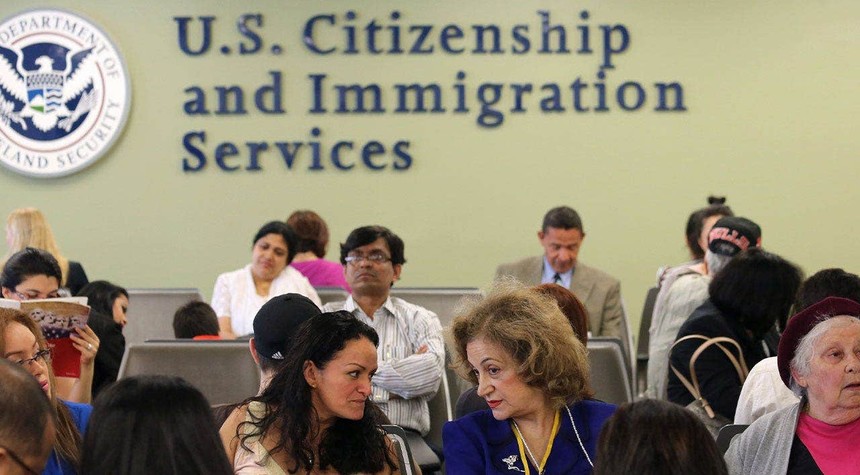
A federal judge in Boston has struck down the Trump administration’s ambitious effort to impose a $100,000 fee on H-1B visa applications, ruling the measure constitutes an unauthorized tax beyond the executive branch’s authority. The administration had dramatically increased the fee from the standard range of $2,000 to $5,000, arguing the higher cost would incentivize employers to prioritize American workers. The Justice Department has indicated it will appeal the decision.
Even as this legal setback unfolds, the administration is moving forward with another significant change to the nation’s employment-based visa system. According to an unpublished document posted to the Federal Register, U.S. Citizenship and Immigration Services and the Department of Homeland Security are preparing to eliminate the 60-day grace period currently afforded to foreign workers who lose their jobs.
Under existing immigration regulations, holders of employment-based visas, particularly the H-1B program for skilled workers with bachelor’s degrees or higher, receive a 60-day window to secure new employment after job loss. The proposed rule would eliminate this buffer entirely, requiring immediate departure from the United States upon cessation of the employment that formed the basis for their visa status.
The administration’s rationale centers on program integrity and administrative efficiency. The proposed rule states that the change would “restore a direct relationship between an alien’s nonimmigrant status and the specific employment or activity that formed the basis of his or her admission or grant of status in the United States.”
Department of Homeland Security officials argue that the grace period, established in a rule that took effect just three days before President Trump’s first inauguration in January 2017, has created unnecessary complications. The agency contends that determining when the grace period applies, reviewing submitted information, and deciding whether to shorten or eliminate it on a case-by-case basis has proven time-consuming and complex for both the government and visa holders.
“DHS believes that restoring the expectation that aliens depart the United States upon cessation of the employment or activity upon which the alien’s status was based would better promote program integrity and be more consistent with statutory purpose,” the proposal reads.
The timing of these dual developments underscores the administration’s determination to fundamentally restructure the legal immigration system, particularly as it relates to employment-based visas. For more than seven years, since the grace period was implemented in the final days of the Obama administration, foreign workers have relied on this two-month window to transition between employers without falling out of legal status.
The State Department has already revoked more than 175,000 visas under the current administration, reflecting a broader effort to tighten immigration enforcement across multiple programs.
The proposed elimination of the grace period represents a return to pre-2017 policy, when no such accommodation existed. Should the rule survive the regulatory process and any legal challenges, it would fundamentally alter the landscape for hundreds of thousands of foreign workers and their employers who have structured hiring and retention practices around the existing grace period.
The administration maintains that American workers will benefit from these changes, as employers may find domestic hiring more attractive when foreign workers face stricter conditions and higher costs.
Related: Seahawks Rally Past Patriots in Season Opener Despite Darnold Injury
