
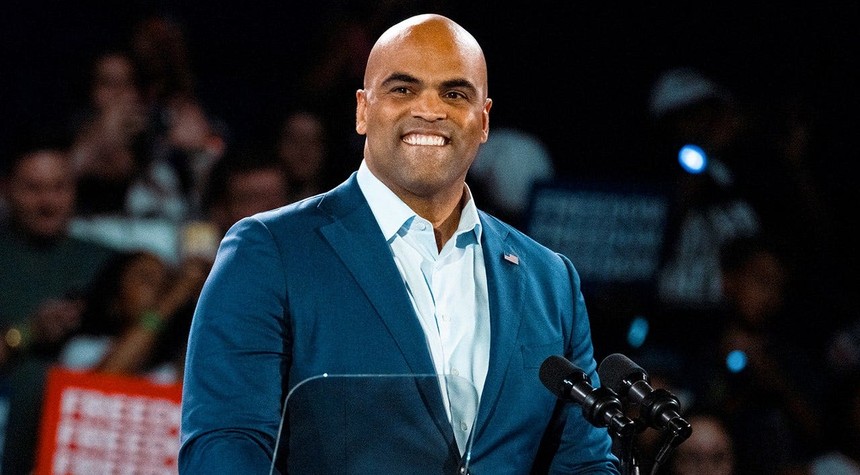
Former Representative Colin Allred has won his return ticket to Congress after defeating Representative Julie Johnson in Tuesday’s Democratic primary runoff for a newly configured House district in the Dallas area.
The Associated Press called the race for Allred, who now faces what amounts to a formality in November’s general election. The district, already solidly Democratic before redistricting, was made even more favorable to Democrats during last year’s congressional map redrawing process.
The Republican-controlled Texas legislature’s decision to strengthen this Democratic seat was part of a broader strategy. By concentrating Democratic voters in certain districts, Republican mapmakers aimed to create opportunities to flip as many as five other seats across the state to their party’s advantage. It represents a calculated trade-off that has become standard practice in modern redistricting efforts by both parties.
The primary contest between Allred and Johnson grew increasingly contentious as both sought to salvage their political careers. With Representative Marc Veasey, the district’s incumbent, choosing not to seek re-election, the seat represented one of the few remaining opportunities for advancement in a state where Democratic prospects have steadily diminished.
Johnson, a freshman legislator, found herself in the race after Republican mapmakers effectively eliminated her previous district. She had initially succeeded Allred in Congress when he vacated his seat to challenge Senator Ted Cruz in the 2024 election cycle. That Senate bid ultimately proved unsuccessful for Allred, making this House seat his pathway back to Washington.
The redistricting process in Texas highlights the ongoing partisan battle over congressional maps nationwide. While Republicans strengthened their position in multiple districts across the state, they were willing to sacrifice this Dallas-area seat, acknowledging the political reality of its deeply Democratic electorate.
For Allred, the victory marks a political resurrection of sorts. His failed Senate campaign against Cruz, while unsuccessful, raised his profile statewide. Now he returns to the House with that enhanced visibility and the experience of a statewide campaign behind him.
Johnson’s defeat ends what was already a brief congressional tenure. Having just arrived in Washington, she faced the difficult task of competing against a better-known opponent with established relationships and name recognition in the district.
The November general election in this deep-blue district should present little challenge for Allred. The real contest has concluded, decided by Democratic primary voters who chose the familiar over the new.
This race underscores the current state of Texas politics, where redistricting has created increasingly safe seats for both parties while reducing competitive districts. Democrats maintain strongholds in urban areas like Dallas, while Republicans have solidified their advantages elsewhere across the state. The result is a congressional delegation that reflects partisan sorting rather than competitive electoral politics.
Allred will join a Democratic caucus in the House that remains in the minority but continues to hold firm control over Texas’s major metropolitan areas.
Related: Chicago Alderman Challenges Mayor’s Response to Memorial Day Teen Violence
