
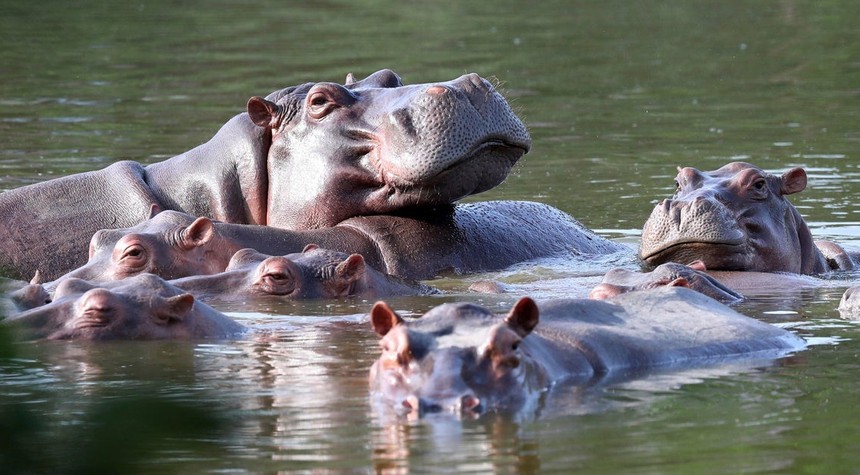
The son of Indian billionaire Mukesh Ambani has formally requested that the Colombian government halt plans to cull the descendants of hippopotamuses originally imported by the late drug lord Pablo Escobar, offering instead to relocate the animals to his wildlife facility in India.
Anant Ambani submitted his proposal to Colombian authorities this week, requesting permission to conduct what he described as a “safe, scientifically-led translocation” of approximately 80 hippos to his Vantara animal center in Gujarat, India’s western state. The massive facility markets itself as one of the world’s largest wildlife rescue, care, and conservation centers.
The hippos in question have become an ecological concern for Colombia. Native exclusively to Africa and capable of weighing several tons, these animals were brought to South America by Escobar during his reign as one of history’s most notorious drug traffickers. Following Escobar’s death in 1993, the hippos escaped confinement and established a breeding population in Colombian waterways, where they have caused significant environmental disruption to local ecosystems.
Colombian officials have weighed various solutions to address the invasive species, including culling operations, as the hippo population continues to expand and threatens native wildlife and river systems. The animals have proven remarkably adaptable to their new environment, breeding successfully in the tropical climate.
The Vantara facility already houses an extensive collection of wildlife, according to India’s Central Zoo Authority. Current residents include hundreds of elephants, approximately 50 bears, 160 tigers, 200 lions, 250 leopards, and 900 crocodiles, among numerous other species. The sheer scale of the operation has drawn both admiration and scrutiny from wildlife experts.
However, the proposal arrives amid ongoing controversy surrounding Vantara’s operations. Wildlife experts have raised repeated concerns about the facility’s massive animal intake, particularly regarding the importation of critically endangered and rare species. Questions persist about the center’s capacity to provide adequate care for such a vast number of animals from diverse species.
The facility became the focal point of significant public protest last year following the relocation of an ailing elephant to its grounds. Critics argued that the animal required specialized care that the facility might not adequately provide.
The logistical challenges of such a translocation would be considerable. Moving 80 hippos across continents would require extensive planning, specialized transport, and careful veterinary oversight. The animals would need to be safely captured, transported thousands of miles, and then acclimated to their new environment in India.
The Colombian government has not yet publicly responded to Ambani’s proposal. Officials there face a difficult decision, balancing ecological concerns against animal welfare considerations and the practical challenges of managing an invasive population that shows no signs of natural decline.
As this situation develops, it represents an unusual intersection of conservation science, international diplomacy, and the lasting legacy of one of the twentieth century’s most infamous criminals.
Related: Suspect Used Service Staircase to Evade Detection at White House Correspondents’ Dinner
