
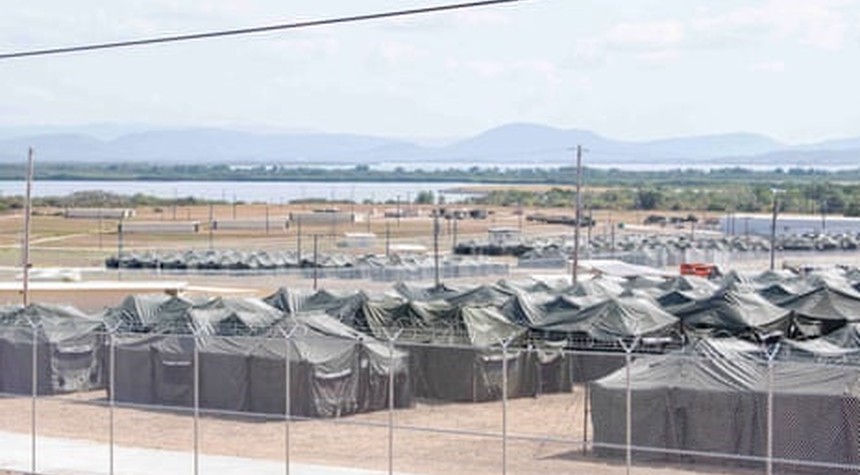
Eighty-five American and international human rights organizations have formally objected to the Trump administration’s contingency plans for establishing a migrant detention facility at Guantánamo Bay Naval Base should Cuba experience a humanitarian crisis.
The coalition submitted a joint letter to members of the United States Senate and House of Representatives on Friday, expressing what they termed “profound concern” over recent statements from senior Defense Department officials regarding the treatment of potential Cuban refugees.
Last month, a top Department of Defense commander testified before Congress that the Pentagon stands ready to “set up a camp” at the Guantánamo Bay facility to “deal with” migrants in the event of what was characterized as “any humanitarian crisis” on the island nation. The testimony came in response to questioning from Republican senators about preparedness measures should conditions in Cuba deteriorate significantly.
The human rights organizations described any expansion of migrant detention operations at Guantánamo Bay as “deeply troubling and unacceptable.” Their letter represents a coordinated effort to pressure lawmakers to prevent what they view as an inappropriate use of the military installation.
The concerns arise against a backdrop of increasingly unstable conditions in Cuba. In February, the United Nations issued a warning that Cuba could be approaching a humanitarian “collapse,” lending urgency to questions about how the United States would respond to a potential mass migration event.
Guantánamo Bay Naval Base carries particular historical significance in American immigration policy. The facility previously served as a processing center for Cuban and Haitian migrants intercepted at sea during the 1990s, a practice that drew substantial criticism from humanitarian advocates at the time.
The current administration’s approach reflects ongoing tensions in United States policy toward Cuba, which has intensified economic pressure on the communist government while simultaneously preparing for possible consequences of that pressure, including large-scale migration.
The letter to Congress represents an attempt by civil society organizations to influence policy before any crisis materializes. The groups argue that establishing detention facilities in advance signals an intent to pursue policies they consider contrary to international humanitarian standards and American values regarding asylum seekers.
The timing of this advocacy effort suggests that human rights organizations view the current moment as critical for shaping the administration’s response framework. By mobilizing congressional attention now, these groups hope to forestall what they characterize as problematic detention policies before implementation becomes operational reality.
The Pentagon has not elaborated on specific details of its contingency planning beyond the commander’s testimony. Questions remain about the scale, duration, and conditions of any proposed facility, as well as the legal framework that would govern migrants detained at the naval base.
As Cuba’s economic situation continues to generate international concern, the debate over how America should prepare for and respond to potential migration represents a significant test of competing priorities: national security considerations, humanitarian obligations, and the complex legacy of United States-Cuba relations.
Related: University Officials Remove Pride Flags During Spring Break Under Existing Display Policy
