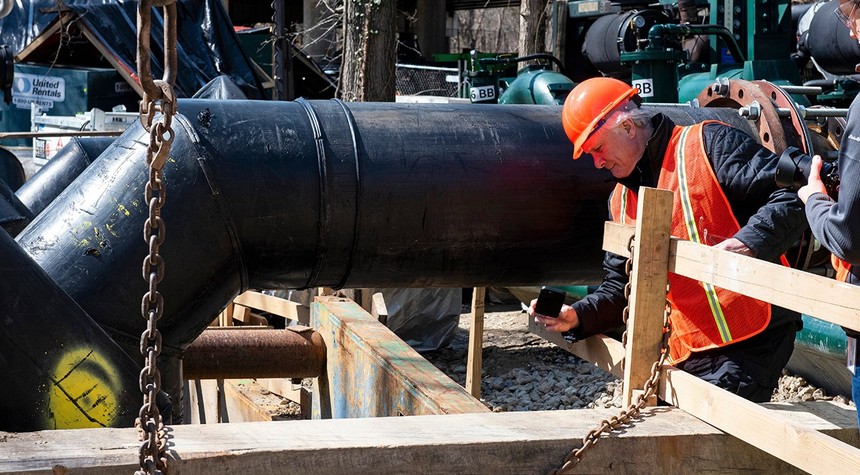
Emergency repairs have been completed on the Potomac River sewage system following a catastrophic failure that released more than 240 million gallons of raw sewage into one of the nation’s most historic waterways.
DC Water announced Saturday that full flow has been restored to the Potomac Interceptor, the critical sewage pipe that ruptured on January 19. The Chesapeake and Ohio Canal has been fully drained as part of the site restoration effort. Crews worked continuously since the initial failure to stabilize the site and protect the river from further contamination.
The completion of repairs comes less than one month after President Donald Trump approved a disaster declaration for the District of Columbia, enabling the Federal Emergency Management Agency to provide crucial assistance with the cleanup operation. The president expressed concern that the river might still carry the odor of sewage when America250 celebrations commence this summer, marking the nation’s 250th anniversary.
The sewage spill represents one of the most significant environmental incidents in the capital region’s recent history. E. coli levels surged in the Potomac River near Washington following the rupture, raising serious public health concerns for residents and visitors alike.
Washington Mayor Muriel Bowser declared a local disaster emergency and formally requested federal assistance to address the crisis. The swift federal response enabled repair crews to work around the clock to contain and remedy the situation.
The incident sparked a public dispute over responsibility and oversight. President Trump directed criticism toward Maryland Governor Wes Moore and other local Democratic leaders in Virginia and the District of Columbia, asserting that incompetence led to the infrastructure failure.
Governor Moore firmly rejected these assertions, maintaining that the federal government bears primary responsibility for the affected infrastructure. The Maryland governor emphasized that the ruptured pipe is located on federal land and falls under federal jurisdiction.
“This is a Washington, D.C., pipe on federal land,” Moore stated. “Maryland has nothing to do with this. In fact, the only thing Maryland did was when we saw a neighbor who was in need. That’s why I ordered people, our people to go support them, and that’s what we’ve been doing the past month.”
Moore further argued that Maryland personnel have been performing duties that properly belong to the federal government, given the location of the infrastructure on federal property. He characterized the president’s criticism as absurd under these circumstances.
The sewage infrastructure in question is managed by DC Water, an independent utility based in the District of Columbia. The utility’s operational independence complicates questions of oversight and accountability for the infrastructure failure.
Legal ramifications have already emerged from the incident. A Virginia resident filed a class action lawsuit on March 6 against DC Water, alleging negligence in the maintenance and operation of the sewage system that led to the massive spill.
The rapid completion of repairs demonstrates the effectiveness of federal assistance when properly deployed. The incident also raises broader questions about the state of aging infrastructure in the nation’s capital and the clear delineation of responsibility for maintaining critical systems that cross jurisdictional boundaries.
As the cleanup concludes, attention will likely turn to preventing similar failures in the future and ensuring accountability for this significant environmental incident.
Related: Model Brooks Nader and Sisters Stage Marketing Stunt in Manhattan Bubble Outfits