
The United States military continues its rapid deployment of additional forces to the Middle East as Operation Epic Fury enters its second week, with combat operations showing no signs of immediate conclusion.
General Dan Caine, Chairman of the Joint Chiefs of Staff, confirmed during a Pentagon briefing Monday morning that fresh troops and equipment are arriving in theater even as he spoke. The general declined to specify exact numbers, citing operational security concerns that could provide tactical advantages to adversaries.
“The flow of forces continues today,” Caine stated. “Admiral Cooper will receive additional forces even today. I don’t want to talk specifics, because that would tip the enemy off.”
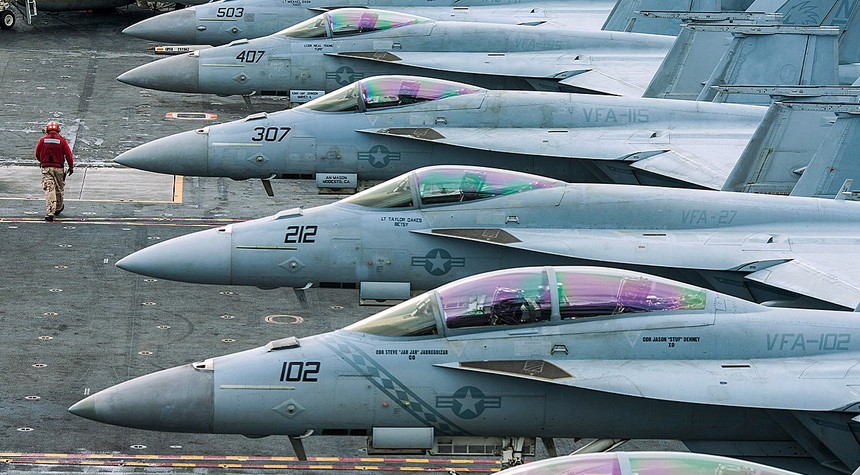
The chairman indicated that tactical aviation assets are among the reinforcements now entering the region, with transit times accounting for the staggered arrival of equipment. Video footage released by U.S. Central Command shows F-18 and F-35 fighter jets returning from combat sorties over Iranian airspace, visible evidence of the sustained air campaign now underway.
“I think we’re just about where we want to be in terms of total combat capacity and total combat power for Admiral Cooper,” Caine said, referring to Central Command chief Brad Cooper.
These latest deployments represent the culmination of a monthlong repositioning of American military assets across the Middle East. The buildup includes carrier strike groups, advanced fighter aircraft, and sophisticated air defense systems necessary to prosecute what Pentagon officials have characterized as major combat operations.
The human cost of the campaign continues to mount on both sides. According to available reporting, 555 Iranian personnel have been killed as of Monday morning. The United States has not emerged unscathed. Four American service members have lost their lives since operations commenced in the early hours of Saturday Eastern Time. Defense Secretary Pete Hegseth confirmed that these casualties resulted from an Iranian missile that penetrated defensive systems at a tactical command center.
The stated objectives of Operation Epic Fury are specific and limited in scope. General Caine outlined the mission as preventing Iran from projecting power beyond its borders. This includes destroying Iranian missile capabilities and production facilities, eliminating naval assets, and ensuring the regime cannot pursue nuclear weapons development.
“This is not a so-called regime change war, but the regime sure did change and the world is better off for it today,” Secretary Hegseth added, though he did not elaborate on what governmental changes may have occurred within Iran.
Both military leaders acknowledged the operation’s extended timeline. “This will take some time,” General Caine warned, adding soberly, “We expect to take additional losses.”
The frank admission underscores the reality facing American forces engaged in sustained combat operations against a regional power with considerable defensive capabilities. The penetration of U.S. air defenses that resulted in American casualties demonstrates that Iran retains the ability to strike back, even as its broader military infrastructure comes under systematic attack.
As forces continue flowing into the region, the American military appears committed to maintaining operational tempo until stated objectives are achieved, regardless of the duration required.
Related: Iranian-American Business Leader Criticizes Democratic Response to Trump Strike
