
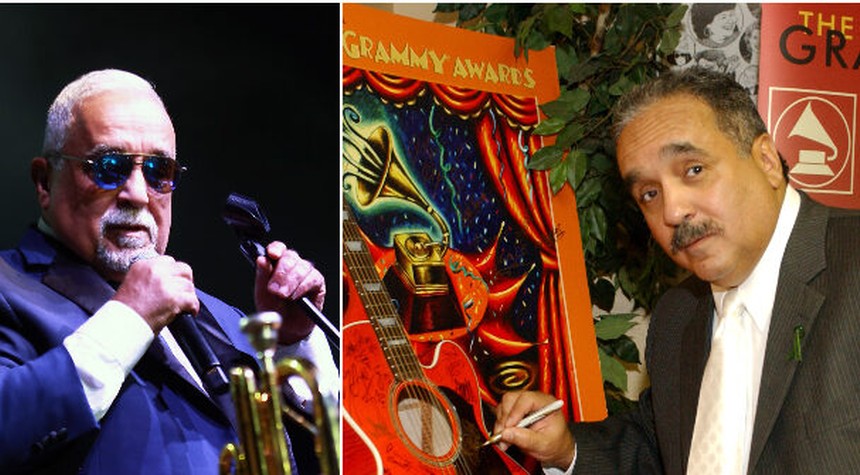
Willie Colón, the Nuyorican music icon whose innovative sound helped define salsa music for generations, died Saturday in New York at the age of 75. His passing marks the end of an era for a uniquely American art form that bridged cultures and challenged conventions.
Born in the South Bronx, Colón rose to prominence as a pioneer of tropical dance music in the 1960s and 1970s. He was more than a performer. He was a producer, a civil rights activist, and later in life, a law enforcement officer who joined the police academy at 64 to fulfill a lifelong ambition of service.
Colón’s influence on Hispanic dance music cannot be overstated. He made the trombone an instrument of urban cool, crafting a sound that resonated far beyond New York’s Latin neighborhoods. His music told stories of an America that mainstream media often overlooked, giving voice to communities that had long existed in the shadows of broader cultural recognition.
Perhaps most remarkably, Colón cultivated a “gangster” image decades before it became commonplace in hip-hop culture. His album covers frequently depicted him in the role of a street tough, a calculated artistic choice that would later be echoed by artists like Tupac Shakur and NWA. This was not mere posturing. It was a reflection of the gritty urban reality that shaped his worldview and his art.
Yet there remains an aspect of Willie Colón’s legacy that deserves equal attention but will likely receive less. Throughout his life, Colón stood firmly for principles that defined his character as much as his music defined his career. He was an unapologetic American patriot, a vocal opponent of communism, and a consistent critic of socialism in all its forms.
These convictions were not political calculations or late-in-life conversions. They were core beliefs that Colón maintained proudly until his final days. His contrarian streak ran deep, born from the same independence of spirit that allowed him to revolutionize Latin music while others followed safer paths.
The man who made gangster chic cool before rap music existed also understood something fundamental about the American experiment. He recognized the difference between the freedom that allowed him to create and succeed, and the systems of control that stifled human potential elsewhere. This understanding informed not only his activism but his decision to serve as a law enforcement officer, a choice that reflected his commitment to order and community protection.
Willie Colón’s life embodied contradictions that were not contradictions at all, but rather the full spectrum of American possibility. He was an artist and a policeman. A Bronx tough guy and a sophisticated musician. A champion of Hispanic culture and a fierce defender of American values.
His music will endure, certainly. The rhythms he pioneered continue to move dancers across the globe. But the complete measure of the man requires acknowledging all that he stood for, not merely the aspects that fit comfortably into contemporary narratives.
That is the legacy Willie Colón leaves behind, and that is the void his passing creates in American cultural life.
Related: Trump Administration Immigration Actions Test Multiple Bill of Rights Protections
