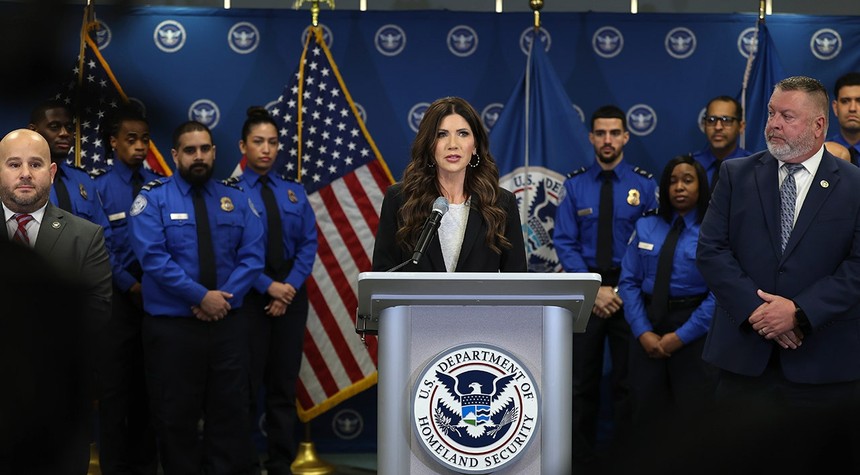
Homeland Security Secretary Kristi Noem delivered a detailed briefing Saturday on the state of aviation security in America, revealing that Transportation Security Administration operations have prevented tens of thousands of individuals with suspected ties to terrorism from boarding commercial aircraft over the past twelve months.
Speaking from Miami International Airport, Secretary Noem outlined the scope of TSA screening efforts, which she characterized as essential to maintaining the integrity of American transportation networks. The figures she presented paint a picture of substantial ongoing threats to aviation security that many Americans may not fully appreciate.
According to the Secretary, TSA officers at Miami International alone prevented more than 10,000 individuals with suspected connections to narcoterrorism from traveling during the past year. Beyond that figure, an additional 85,000 people who appeared on the U.S. terrorism watch list or had identified links to terrorist organizations were stopped from boarding flights at the facility.
These numbers represent a significant enforcement effort at a single major airport hub. Miami International serves as a critical gateway for international travel, particularly for routes connecting the United States with Latin America and the Caribbean. The volume of passengers moving through the facility makes it both a vital economic asset and a potential vulnerability in the nation’s security infrastructure.
Secretary Noem’s briefing also addressed efforts beyond traditional security screening. She drew attention to Miami International Airport’s specialized human trafficking unit, which conducted more than 2,200 inspections over the same twelve-month period. Those operations resulted in 24 arrests connected to child exploitation cases.
The human trafficking component of airport security operations represents a growing focus for federal law enforcement agencies. Major transportation hubs have increasingly become focal points for interdiction efforts, as traffickers frequently use commercial aviation to move victims across state and international borders.
The Secretary’s appearance at Miami International comes as the Department of Homeland Security continues to emphasize what it describes as evolving threats to transportation security. The department has maintained that screening procedures must adapt to address not only traditional terrorism concerns but also transnational criminal organizations that exploit legitimate travel infrastructure.
The figures presented by Secretary Noem raise questions about the nature and extent of threats facing American aviation. The distinction between individuals with ties to narcoterrorism and those on formal terrorism watch lists suggests a complex threat landscape that extends beyond ideologically motivated extremism to include criminal enterprises with terrorist connections.
While the Secretary emphasized the success of current screening operations, the sheer volume of individuals flagged and prevented from traveling underscores the ongoing challenge facing TSA personnel at airports nationwide. The agency processes hundreds of millions of passengers annually, and the screening protocols required to identify high-risk travelers demand substantial resources and coordination across multiple intelligence agencies.
The briefing provided no specific information about how individuals are identified as having ties to narcoterrorism or terrorism, nor did it detail what happens to those prevented from boarding flights. These operational details remain classified for security reasons, though they are central to understanding the full scope of TSA enforcement activities.
Related: Authorities Dismantle Alleged Title Fraud Ring at Florida Luxury Auto Dealer