
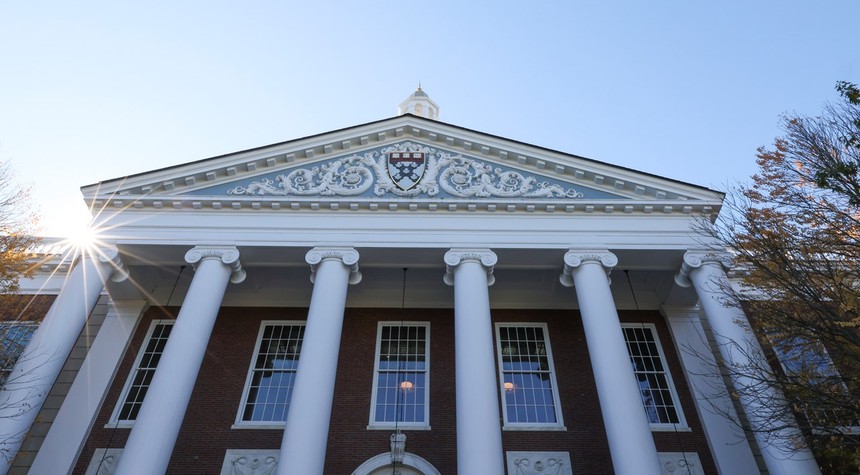
Harvard University, long considered the pinnacle of American academic achievement, has fallen to third place in global research rankings, trailing two Chinese institutions in a development that raises serious questions about the state of American higher education.
The rankings, compiled by Leiden University in the Netherlands, measure universities based on the volume and significance of their research publications. Unlike reputation-based assessments, this analysis relies on hard data regarding scholarly output. The results are sobering for American academia: of the top twenty institutions worldwide, only Harvard and the University of Michigan represent the United States. China claims sixteen of those twenty positions.
This is not a matter of perception or prestige. These rankings measure what research universities exist to accomplish: the production of serious scholarship at scale. When the world’s most famous university slides in such concrete metrics, and when one nation so thoroughly dominates the upper echelon of global research, it demands examination of what has gone fundamentally wrong.
The decline cannot be attributed to any sudden deficit in American intellectual capacity. Rather, American universities have become less serious institutions. The focus has shifted from truth-seeking, merit, and rigorous education toward diversity, equity, and inclusion initiatives, identity politics, and campus activism. This transformation affects every aspect of research production, from faculty hiring to teaching methods to the fundamental culture of scholarly inquiry.
Faculty hiring increasingly rewards ideological compliance over intellectual excellence. Diversity statements and demonstrations of commitment to particular political viewpoints have become standard requirements. Search committees design processes that narrow the acceptable range of perspectives and methodologies. When universities prioritize hiring activists who possess doctoral degrees rather than scholars who happen to hold personal opinions, declining scholarship becomes inevitable.
Teaching has deteriorated in too many institutions into therapeutic affirmation and political mobilization. Students receive indoctrination rather than instruction, producing graduates who lack the writing skills, numerical literacy, and disciplinary rigor necessary to drive the next generation of research and innovation.
The culture of research itself has grown timid and conformist. Entire categories of questions are treated as morally impermissible to investigate. Yet genuine research requires intellectual courage: challenging assumptions, questioning sacred principles, and pursuing truth regardless of where it leads.
Harvard student Tejas Billa has spoken publicly about how the university’s left-leaning bias in academics isolates certain students on campus. Harvard President Alan Garber recently acknowledged that faculty “went wrong” by pushing personal beliefs in the classroom, admitting that political biases on campus have become systematic rather than incidental.
The institution that should be leading American higher education finds itself chasing competitors who have maintained focus on their fundamental mission. While Chinese universities concentrate on research output and scholarly production, American institutions have allowed themselves to be distracted by political and social agendas that, however well-intentioned, do not advance the cause of knowledge.
The question facing American academia is whether it will recognize this decline and take corrective action, or whether it will continue prioritizing ideological conformity over intellectual excellence. The answer will determine not merely Harvard’s ranking, but America’s position in global scholarship and innovation for generations to come.
Related: Nine Dead and Millions Without Power as Historic Winter Storm Batters Nation
