
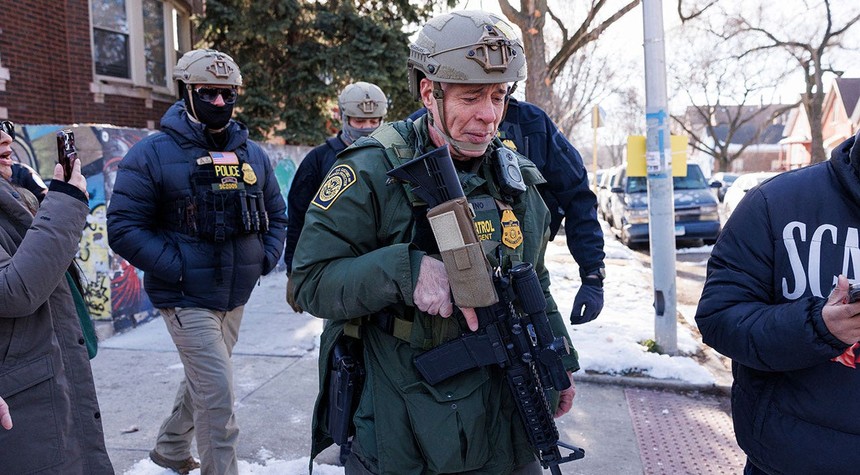
Border Patrol Chief Gregory Bovino returned to Chicago this week, marking a significant escalation in federal immigration enforcement operations that have drawn sharp criticism from state and local officials.
The senior Border Patrol commander’s reappearance in the city comes one month after his reassignment to enforcement missions in New Orleans and North Carolina. His return signals the Trump administration’s continued commitment to Operation Midway Blitz, the enforcement initiative launched in September.
Video footage from Tuesday showed Border Patrol agents operating in the predominantly Mexican-American neighborhood of Little Village, where they deployed pepper balls and detained at least one individual. The operations prompted immediate protests from immigrant advocacy groups and local residents.
Illinois Governor JB Pritzker stated that neither he nor state officials received advance notification of Bovino’s return or the deployment of additional Border Patrol agents to Chicago. The governor expressed uncertainty about the duration of the federal presence but voiced support for Illinois residents.
Chicago Mayor Brandon Johnson issued a statement asserting that federal agents were conducting operations without warrants and deliberately appearing in public spaces to intimidate residents. Johnson specifically mentioned federal presence at a Teamster picket line and a community organization in Little Village, characterizing these tactics as destabilizing.
The Department of Homeland Security defended the operations through Assistant Secretary Tricia McLaughlin, who emphasized that federal authorities had made clear their intention to maintain a presence in Chicago. The department has characterized Operation Midway Blitz as targeting criminal illegal immigrants in what it describes as sanctuary jurisdictions.
The operation was established following the death of Katie Abraham, who was killed in a drunk driving incident allegedly caused by Julio Cucul-Bol, an illegal immigrant from Guatemala. The Department of Homeland Security has stated that the mission aims to apprehend criminal illegal aliens in Illinois.
The renewed federal enforcement activity represents a continuation of the administration’s approach to immigration enforcement in jurisdictions that have adopted sanctuary policies limiting cooperation with federal immigration authorities. The tension between federal enforcement priorities and local resistance to those priorities remains a defining feature of immigration policy implementation.
The situation in Chicago reflects broader national debates about immigration enforcement, federalism, and the appropriate balance between national security concerns and community relations. As federal operations continue, the disagreement between the Trump administration and Illinois officials shows no signs of resolution, with each side maintaining fundamentally different perspectives on the legitimacy and necessity of these enforcement actions.
Related: Eight Injured as Out-of-Control Bus Plows Through Bronx Neighborhood
