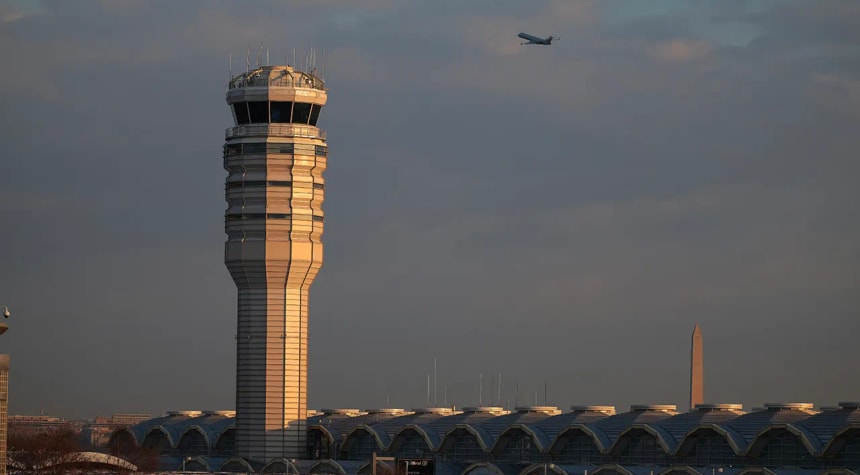
The United States Army is facing mounting criticism over its proposal to resume helicopter training flights near Ronald Reagan Washington National Airport, less than two years after a catastrophic midair collision claimed 67 lives.
The Army has informed select members of Congress of its intention to restart helicopter test flights in the vicinity of the airport, located just miles from the Pentagon, as early as December 1, 2026. The announcement has generated immediate opposition from lawmakers and aviation safety experts who question whether adequate safeguards have been implemented to prevent another tragedy.
Representative Don Beyer of Virginia has expressed grave concerns about the decision to resume training flights before the National Transportation Safety Board’s safety recommendations have been fully implemented. The Virginia Democrat’s office confirmed that Army officials have reached out to the Federal Aviation Administration regarding the request but are still awaiting a response.
The Federal Aviation Administration has stated it has not received a formal request to resume military helicopter flights around the airport. Agency approval is required before any training in the area can restart, according to an FAA spokesperson.
The controversy stems from the January 2025 collision between a U.S. Army Black Hawk helicopter and American Airlines Flight 5342, which killed all 67 people aboard both aircraft. That incident prompted the FAA to halt military helicopter training flights in the area in May 2025 after another Black Hawk helicopter flew too close to the airport, forcing air traffic controllers to reroute commercial flights.
In March 2025, the FAA announced it was permanently closing Helicopter Route 4 between Hains Point and the Wilson Bridge and would evaluate alternative helicopter routes as recommended by the NTSB.
NTSB Chairwoman Jennifer Homendy confirmed that members of the investigative team were briefed on the Army’s plans to begin the initial phase of a return to helicopter flights to the Pentagon through airspace near the airport. However, she noted that the agency has not yet seen the Army’s concept of operations and looks forward to reviewing it once formally submitted to the FAA for evaluation.
Aviation safety experts have raised significant concerns about the proposal. Randy Klatt, flight safety officer at the Foundation for Aviation Safety, pointed to the thousands of loss-of-separation incidents that preceded the midair collision. He noted that Helicopter Route 4 was inherently dangerous as designed, yet remained in use regularly until disaster struck.
The lack of proactive action by the airlines, airport authorities, the FAA, and the Army before the collision does not instill confidence that the resumption of Army training flights will be conducted safely and in close coordination with the FAA, according to Klatt. The Foundation for Aviation Safety has stated it would strongly oppose any action to reopen Helicopter Route 4.
Additional concerns have been voiced by aviation analyst Brent Sadler, who argues there is little justification to restart training flights or even routine flights in the airport area. Interference to commercial air traffic remains a risk, he explained, suggesting that training flights would be better served in areas with lower activity from commercial civilian air traffic.
Army officials have assured congressional offices that no flights will take place unless approved by the FAA. An Army spokesperson acknowledged there is intent to resume flights but confirmed that such operations would require FAA approval. The Army has not publicly commented on the specific safety measures it plans to implement or how it intends to address the concerns raised by safety experts and lawmakers.
The debate underscores the ongoing tension between military operational requirements and civilian aviation safety in one of the nation’s busiest airspace corridors.
Related: Congressional Committees Demand Answers from Reinstated Nvidia Chief Huang